Troubleshooting · a guide, not a sales page
Garage door sensor blinking: what the codes mean
A blinking light is an opener talking to you in the only language it has. What the pattern means depends on who made the opener — but what to do about the commonest cause is the same on all of them.
The short answer
In short.
A steadily blinking sensor light, or an opener light flashing a repeating count, almost always means the safety beam across the bottom of the opening is not getting through. Alignment and a dusty lens are the two usual reasons.
The number of flashes maps to a fault list published by whoever made your opener, and those lists differ between makers and between models. We have linked the manufacturers’ own support sites below rather than printing a table that might not be yours.
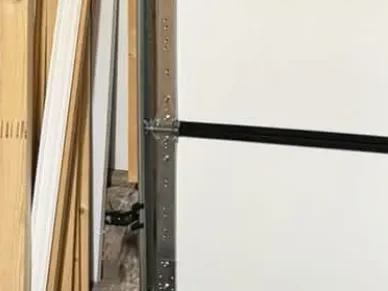
What a blinking light is actually reporting
Two separate things blink on a garage door. The small lights on the photo-eyes at the foot of the tracks report the state of the safety beam. The light on the opener head itself often flashes a repeating pattern to report a diagnostic code.
They are related, because the commonest diagnostic code on most openers is the safety beam. If a door will not close and something is blinking, start at the floor rather than at the ceiling.
The beam, and the three things that break it
- Something in the wayThe beam runs low across the opening. A bin, a hose, a bag of compost, a bike wheel.
- A dirty lensDust, cobwebs, a film of grime. A soft dry cloth is the whole repair.
- AlignmentA bracket knocked by a car door or a rolling bin. The pair has to face each other; most tell you with their own indicator light when they do.
- Low sunDirect sun into the receiving eye can wash the beam out at one time of day — a bracket-shading problem, not a fault.
- A damaged wireA staple through it, or a wire pulled by something moving. Look with your eyes, do not tug.
If the door closes normally afterwards, the code has done its job and there is nothing to buy.
Free Estimates
5-Year Warranty on All Parts & Labor.Five years on parts and labor, every repair and every install. We look at the door with you first, and nothing starts until you approve the number.
Why we have not printed a blink-code table
Because the code that means one thing on one opener means something else on another, and a table copied from the wrong maker sends people to buy parts they do not need.
What is reliable is going to the support site of whoever made your opener, with the model number from the label on the back or side of the motor unit. The LiftMaster and Chamberlain badges are answered by the same support site, and Genie keeps homeowner resources of its own. Both are linked below.
One genuinely useful detail on a LiftMaster or a Chamberlain: the colour of the learn button on the back of the unit tells you which radio system it uses, which is what decides whether a given remote can pair with it at all. That is the maker’s own documentation, linked below, and it saves a wasted purchase.
On a Genie, the rolling code changes on every press by design. A remote that has stopped working usually needs programming again rather than replacing.
When blinking means stop rather than clean
- If the opener blinks and the door also moves crookedly, stop using it — that is a door problem the opener is reporting.
- If the code appeared at the same time as a loud bang, treat it as a spring first and a code second.
- Never disable, tape over or bypass the photo-eyes to silence a code. They are the reason a closing door stops for a child or a pet.
- Never work on the spring, cables or drums to clear a code.
Anything past cleaning, clearing and telling us what you see is a visit. Photo-eye alignment is one of the four things on the safety check we do on every visit, so it gets looked at whatever we came for.
Free Estimates · a person answers 24/7
5-Year Warranty on All Parts & Labor.Five years on parts and labor, every repair and every install. Call, or send the form and a person calls you back.
Sources
- Chamberlain Group — LiftMaster, Chamberlain and myQ support
- The Genie Company — support and homeowner resources
- DASMA — Technical Data Sheets (Door & Access Systems Manufacturers Association)
All sources read . Linked so you can check them rather than take our word for it.
Written from the manufacturers’ own published guidance — every source is linked above.
What you can count on
- Same-day service on most repairs.
- Upfront pricing. The price is on the estimate you approve before work starts, and the invoice matches it.
Straight answers
Questions people ask about this.
My sensor light is blinking and the door will not close. What is it?
What does a specific number of flashes mean?
Where is the model number?
Is it the opener or the door?
Describe it however makes sense to you
Read enough? Tell us about the door.
However you describe it is enough — no part names needed. The visit and the written estimate cost you nothing, and nothing starts until you approve the number.
- However you describe it is enough. No part names needed.
- The written estimate is free. Nothing owed if you pass.
- Nobody starts the repair until you approve the number.
Calls Answered 24/7
One call, and the door problem becomes ours.
A person answers 24/7. We look at the door with you first, and the written estimate comes before the work.