Troubleshooting · a guide, not a sales page
Garage door won’t close? What to check, in order
A door that goes up but refuses to come down is usually a door being stopped on purpose. Something in its safety system has decided the opening is not clear, and the opener is obeying it.
The short answer
In short.
Look at the two small sensors at the bottom of the tracks first. If one has been knocked, or its lens is dusty, the door will open all day and refuse to close. That is the commonest cause and the easiest to see.
If the sensors are clean, square and lit, the next questions are whether the door reverses on its own after touching down, whether it stops short of the floor, and whether anything has changed in the tracks. Each one points somewhere different.
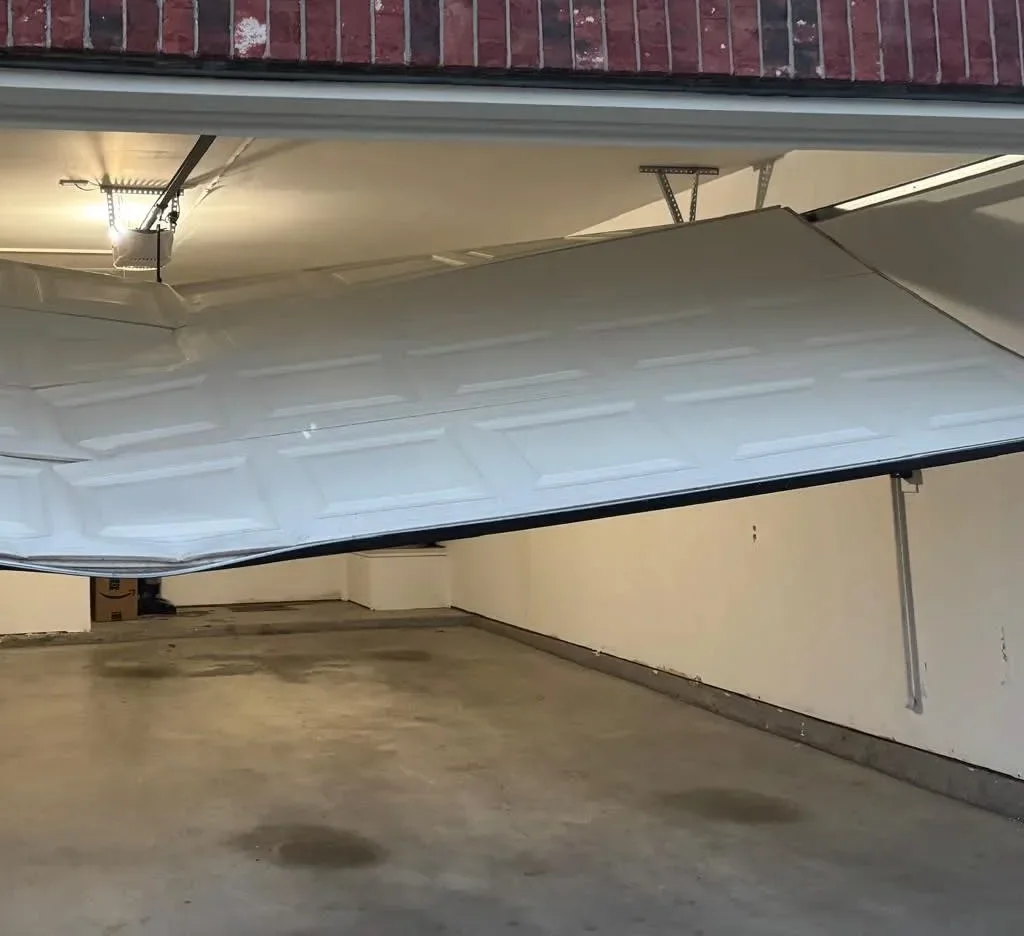
Start at the floor: the two photo-eyes
Near the bottom of each vertical track, about a shin’s height off the floor, there is a small eye on a bracket. One sends an invisible beam across the opening and the other receives it. Break that beam and the door will not close — that is the whole point of it.
You can check all of this from a standing position, without tools and without touching the door itself.
- Look for something in the beamA bin, a bike wheel, a coiled hose, a broom handle leaning in the opening. The beam sits low, so low things are what break it.
- Wipe both lensesA soft dry cloth. Dust, cobwebs and a film of road grime all read as an obstruction.
- Check both are still pointing at each otherA bracket that has been nudged by a car door or a rolling bin throws the pair out of line. Most have a small indicator light that changes when they lose each other.
- Look for sun straight into a lensLate, low sun into the receiving eye can wash the beam out at the same time every day. That is a bracket-position problem, not a fault.
- Follow the wire with your eyesA staple through a wire, or a wire pulled tight by something moving in the garage, stops the pair talking. Do not pull on it.
If the door now closes normally, that was it. Nothing else needs doing, and nothing needs buying.
If it closes, touches down, then opens again
That is the door’s other safety system: the opener felt more resistance than it expected on the way down and reversed, exactly as it is designed to. The question is what it is feeling.
Sometimes it is genuinely something on the floor — a threshold seal that has curled, ice, a stray piece of timber. Often it is the door itself getting harder to move: a dragging roller, a track out of true, a spring no longer carrying its share of the weight.
This is where to stop turning it into an experiment. Repeating the cycle to see if it does it again teaches you nothing new and puts the load through a door that has already said it is unhappy.
Free Estimates
5-Year Warranty on All Parts & Labor.Five years on parts and labor, every repair and every install. We look at the door with you first, and nothing starts until you approve the number.
If it stops short and just sits there
A door that halts a hand’s width from the floor and stays there is usually being stopped by travel limits — the opener’s idea of where the floor is — or by something physical in the last stretch of track.
Limits do drift over the years, and they are a setting rather than a part. But a door that used to close and now stops short has usually changed physically, and the limit is reporting the change rather than causing it. That is worth a look before anyone adjusts anything.
If the garage cannot be secured tonight, say that when you call. A garage that will not close is an access problem as much as a door problem, and it changes how the job is handled.
What not to do while you are waiting
- Do not disable, tape over, bypass or unplug the safety sensors to force the door down. They are the reason a door does not close on a child, a pet or a car bumper.
- Do not hold the wall button down to override the reverse. Some openers will close on a constant press, and that is a deliberate override of a warning, not a fix.
- Do not adjust the spring, the cables or the bottom brackets. The counterbalance holds a large amount of stored energy and it is trained work — the makers’ own homeowner guidance says the same.
- Do not leave a part-open door as an overnight arrangement if the garage connects to the house.
Everything on the safe list is: look, wipe, clear the opening, and tell us what you saw.
What to tell us when you call
Two minutes of description makes the visit shorter, and none of it needs a part name.
- What it does, in your words“Goes up fine, comes down a foot, goes back up” is a genuinely useful sentence.
- Whether the sensor lights are onOne steady, one blinking, both dark — whichever it is.
- Whether anything has changedA car nudged a track, a new shelf, a storm, a power cut.
- Whether the garage can be securedIf it cannot, say so — it changes how we dispatch.
- One photograph of the openingFrom a safe distance, showing the door and the floor. Not from underneath it.
Free Estimates · a person answers 24/7
5-Year Warranty on All Parts & Labor.Five years on parts and labor, every repair and every install. Call, or send the form and a person calls you back.
Sources
- Chamberlain Group — LiftMaster, Chamberlain and myQ support
- DASMA — Technical Data Sheets (Door & Access Systems Manufacturers Association)
All sources read . Linked so you can check them rather than take our word for it.
Written from the manufacturers’ own published guidance — every source is linked above.
What you can count on
- Same-day service on most repairs.
- Upfront pricing. The price is on the estimate you approve before work starts, and the invoice matches it.
Straight answers
Questions people ask about this.
The sensor light is blinking.
Can I tape the sensors so it closes tonight?
The door closes if I hold the wall button. Is that all right?
The door won’t close and the garage can’t be secured. What now?
Describe it however makes sense to you
Read enough? Tell us about the door.
However you describe it is enough — no part names needed. The visit and the written estimate cost you nothing, and nothing starts until you approve the number.
- However you describe it is enough. No part names needed.
- The written estimate is free. Nothing owed if you pass.
- Nobody starts the repair until you approve the number.
Calls Answered 24/7
One call, and the door problem becomes ours.
A person answers 24/7. We look at the door with you first, and the written estimate comes before the work.