Troubleshooting · a guide, not a sales page
How to open a garage door manually in a power outage
Every residential opener has a release that takes the door off the motor so it can be moved by hand. Using it is straightforward. Using it on a door with a broken spring is not, and that is the distinction this page exists for.
The short answer
In short.
With the springs intact and the door fully closed, pull the red cord hanging from the rail to disconnect the trolley, then lift the door with both hands from the bottom edge. It should feel light and stay where you leave it.
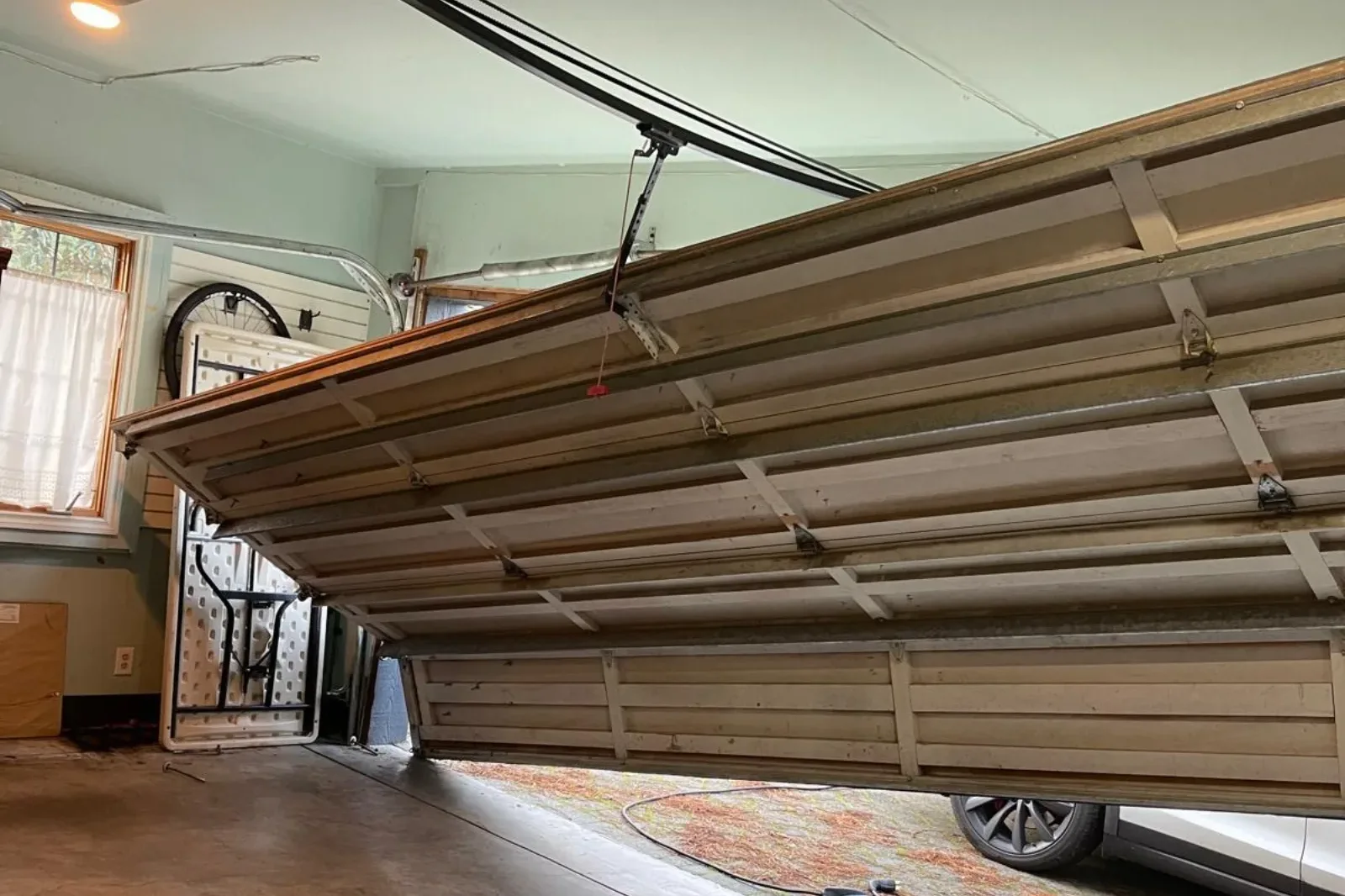
If the door is raised, or if it has ever felt suddenly heavy, or if you heard a bang from the garage: do not pull the cord. That release lets a door with a failed counterbalance come down under its own weight.
Before you touch the cord, answer one question
Is the door fully closed, and does it feel normal when you last moved it?
The springs above the door are what carry its weight; the opener only nudges it. Pull the release on a raised door whose spring has broken and there is nothing left holding the door up but the rail you have just disconnected it from.
- Door closed, no bang, nothing feels different — the release is the right tool.
- Door open, and you suspect a spring — leave it open, keep everyone out of the opening, and call.
- Door closed but you heard a bang — leave it closed and call. A closed door with a broken spring is safe where it is.
- A visible gap in the coil of the spring above the door — that is a broken spring. Stop.
Opening it by hand, step by step
- Cut the power to the openerUnplug it if you can reach the socket safely. It stops the motor waking up mid-job when the power comes back.
- Find the releaseA cord, usually red, hanging from the trolley on the rail that runs from the motor to the door.
- Pull it straight downOne firm pull disconnects the door from the carriage. You will usually hear it let go.
- Lift from the bottom edge, evenlyBoth hands, flat palms, straight up. Keep your fingers off the section joints — they close as the door bends round the curve.
- Notice how heavy it feelsA balanced door is easy and stays where you put it. A door that wants to slam down, or will not stay up, is telling you the counterbalance is wrong. Lower it and stop.
- Lower it the same waySlowly, with control, all the way to the floor. Never let it run.
Free Estimates
5-Year Warranty on All Parts & Labor.Five years on parts and labor, every repair and every install. We look at the door with you first, and nothing starts until you approve the number.
Putting it back on the opener
When the power is back, most openers re-engage on their own: with the door closed, press the button once and the carriage travels along the rail until it clicks back onto the trolley.
Some have a lever or a second pull on the same cord to reconnect. If the door then runs normally, that is that. If the opener runs and the door stays still, it has not reconnected — stop, and do not keep cycling it.
One thing worth checking afterwards: a door left disconnected is a door that can be lifted from outside, so re-engage it, or lock it, before the house is left empty.
The things that go wrong at this point
- Pulling the release with the door up. The commonest injury in this whole subject.
- Lifting a heavy door alone because it is only a few feet. Weight does not care about distance.
- Standing under a partly open door to work the cord.
- Propping a door open with something that can slip.
- Leaving a door disconnected for days as an arrangement, rather than as a way through one evening.
If the door will not move, will not stay up, or feels wrong in any way you cannot name, that is the point to stop and call. A person answers 24/7, and a door that cannot be secured is a reason to get someone out rather than a reason to improvise.
Free Estimates · a person answers 24/7
5-Year Warranty on All Parts & Labor.Five years on parts and labor, every repair and every install. Call, or send the form and a person calls you back.
Sources
- DASMA — Technical Data Sheets (Door & Access Systems Manufacturers Association)
- Amarr — residential garage door FAQs
All sources read . Linked so you can check them rather than take our word for it.
Written from the manufacturers’ own published guidance — every source is linked above.
What you can count on
- Same-day service on most repairs.
- Upfront pricing. The price is on the estimate you approve before work starts, and the invoice matches it.
Straight answers
Questions people ask about this.
Can I just pull the red cord?
How do I know the spring is broken before I pull it?
The opener runs but the door stays still after the power came back
Is a disconnected door a security problem?
Describe it however makes sense to you
Read enough? Tell us about the door.
However you describe it is enough — no part names needed. The visit and the written estimate cost you nothing, and nothing starts until you approve the number.
- However you describe it is enough. No part names needed.
- The written estimate is free. Nothing owed if you pass.
- Nobody starts the repair until you approve the number.
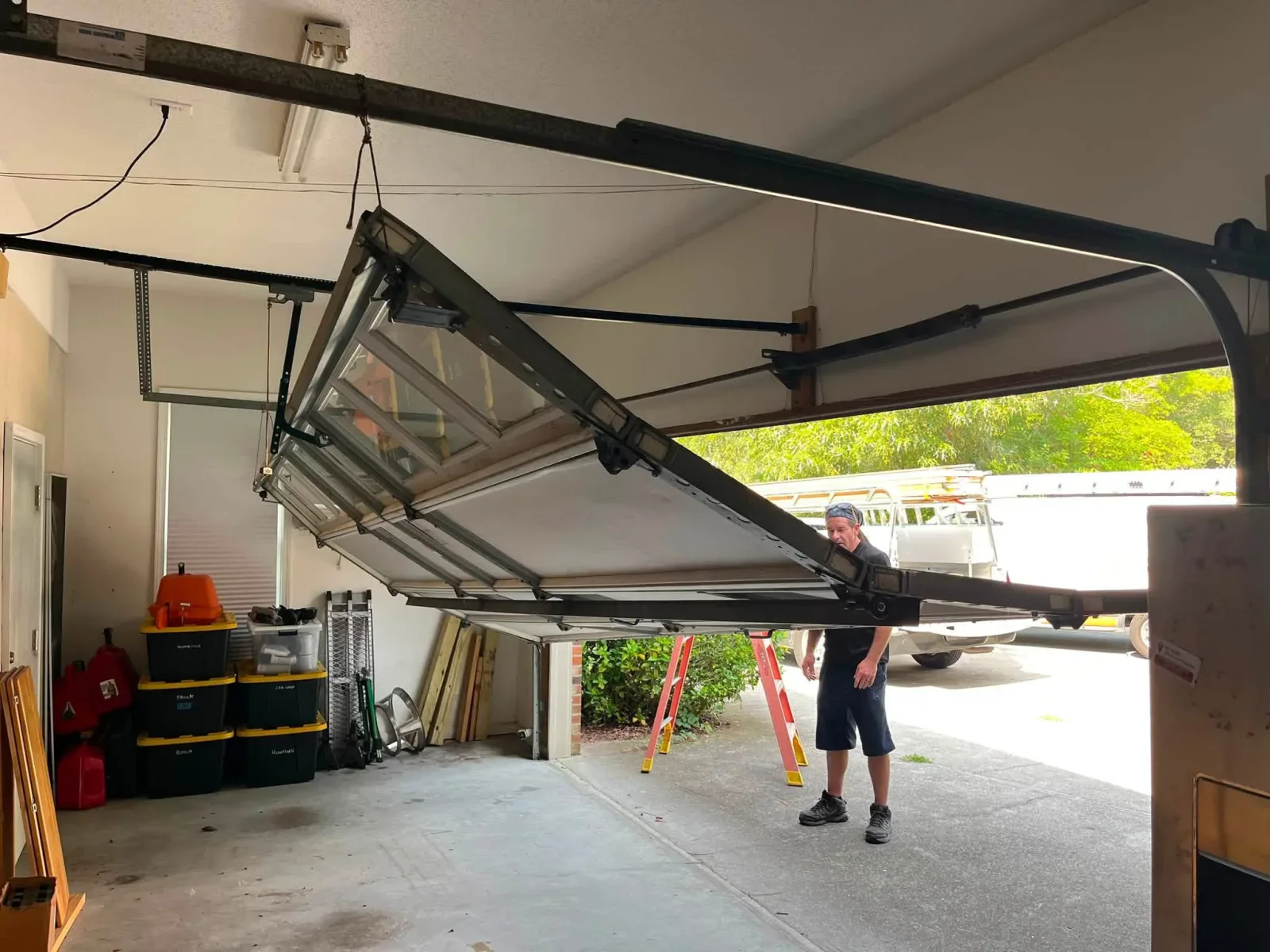
Calls Answered 24/7
One call, and the door problem becomes ours.
A person answers 24/7. We look at the door with you first, and the written estimate comes before the work.