Buying guide · a guide, not a sales page
Belt drive vs chain drive garage door opener
The difference is what pulls the door along the rail: a rubber belt or a steel chain. It changes the noise, and much less else than most comparisons suggest.
The short answer
In short.
A belt is quieter. That is the real difference, and on a garage under a bedroom it is the whole decision. A chain is the older, simpler arrangement and it is not fragile — plenty of chain drives outlast the doors they were fitted to.
What matters more than either is that the opener is sized to the door and that the door is balanced. An opener is a small motor nudging a counterbalanced weight; it is not a lifting machine, and no drive type rescues a door the springs are not carrying.
What the drive actually does
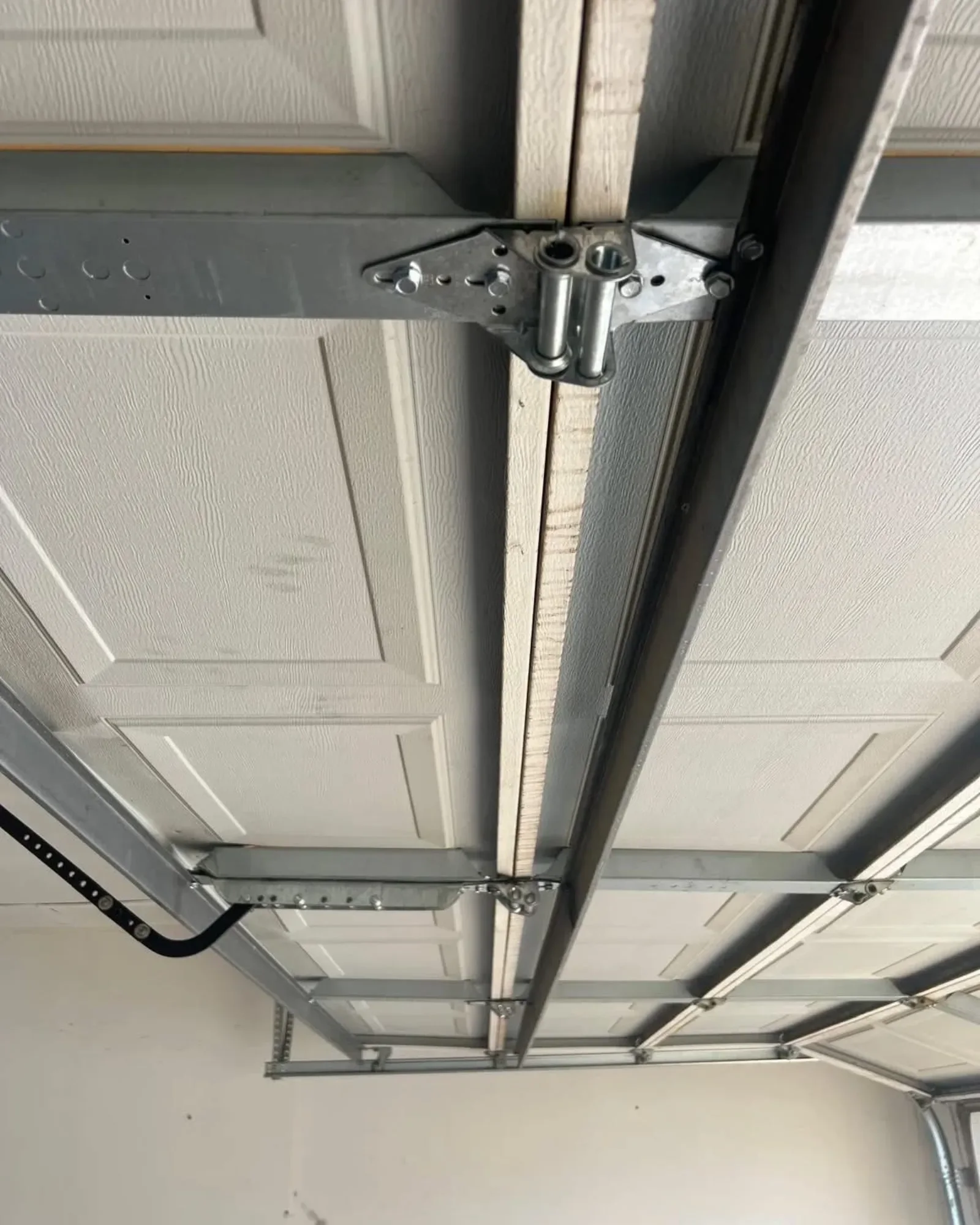
A residential opener does not lift the door. The springs carry the weight and the opener moves it the last little bit, which is why a motor the size of a shoebox can handle a door two people would rather not.
The drive is how that push reaches the door: a trolley runs along a rail, and either a belt or a chain moves the trolley. There is a third arrangement — a screw turning inside the rail — and a fourth where the motor sits on the wall and turns the spring shaft directly.
All of them open the same door. What separates them in use is noise, feel and where the motor hangs.
The honest comparison
- NoiseA belt is quieter, and the gap is easy to hear standing under both. A chain has a metallic note that carries through a shared wall or a bedroom floor.
- VibrationA belt takes the edge off the start and the stop. A chain transmits more of it into the rail and the ceiling.
- WearBoth wear. A chain wants occasional attention and can be re-tensioned; a belt is generally left alone until it is replaced.
- CostBelt drives sit higher in every maker’s range. What either costs on your door is on the written estimate before anything is ordered.
- Heavy or wide doorsSizing matters more than drive type. A wide double or an insulated door wants the right motor and the right spring specification first.
- Where it hangsA wall-mounted operator turns the shaft instead of pulling a trolley, which frees the ceiling entirely — useful in a garage with a high-lift track or storage above the door.
Free Estimates
5-Year Warranty on All Parts & Labor.Five years on parts and labor, every repair and every install. We look at the door with you first, and nothing starts until you approve the number.
How to actually choose
Two questions settle it for most houses. Is there a bedroom, a study or a nursery sharing a wall or a floor with the garage? And does anything else about the garage — headroom, ceiling storage, a lift — push the motor off the ceiling?
If the answer to the first is yes, buy the belt and stop reading comparisons. If the answer to the second is yes, the conversation is about a wall-mounted operator rather than about belts at all.
If both answers are no, a chain drive is a perfectly good purchase, and the money is usually better spent on the parts of the job nobody photographs: nylon rollers, sound hardware and a door that is properly balanced.
What we do before recommending either
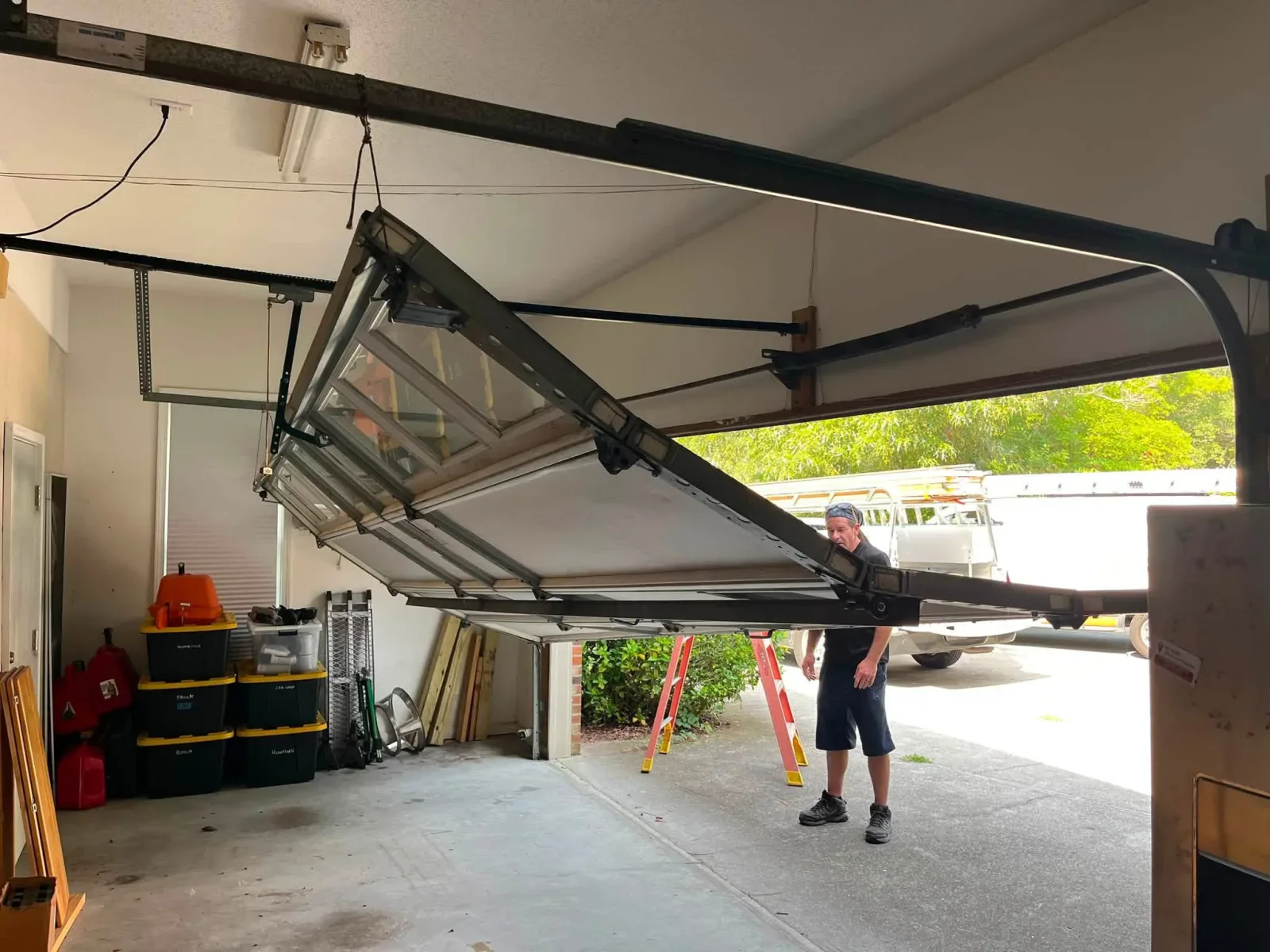
We look at the door first. A door that is out of balance, dragging on a worn roller or running on a spring at the end of its life will work any opener harder than it should, and fitting a new one without fixing that is money spent on the wrong part.
Then the sizing: the opening, the weight of the door and the track arrangement decide what the opener has to be, and that is a specification rather than a preference. What goes on your door — make, drive, and why — is written on the estimate before you approve it, and the invoice matches the number you approved.
Free Estimates · a person answers 24/7
5-Year Warranty on All Parts & Labor.Five years on parts and labor, every repair and every install. Call, or send the form and a person calls you back.
Sources
- Chamberlain Group — LiftMaster, Chamberlain and myQ support
- DASMA — Technical Data Sheets (Door & Access Systems Manufacturers Association)
- The Genie Company — support and homeowner resources
All sources read . Linked so you can check them rather than take our word for it.
Written from the manufacturers’ own published guidance — every source is linked above.
What you can count on
- Upfront pricing. The price is on the estimate you approve before work starts, and the invoice matches it.
Straight answers
Questions people ask about this.
Is a belt drive worth it?
Do chain drives break more often?
Will a new opener fix my heavy door?
What does the warranty cover?
Describe it however makes sense to you
Read enough? Tell us about the door.
However you describe it is enough — no part names needed. The visit and the written estimate cost you nothing, and nothing starts until you approve the number.
- However you describe it is enough. No part names needed.
- The written estimate is free. Nothing owed if you pass.
- Nobody starts the repair until you approve the number.
Calls Answered 24/7
One call, and the door problem becomes ours.
A person answers 24/7. We look at the door with you first, and the written estimate comes before the work.