Buying guide · a guide, not a sales page
Smart garage door opener vs traditional: what changes
A smart opener is a traditional opener that also talks to your home network. The mechanical half — motor, rail, drive, safety beam — is the same equipment, and it is still the half that decides whether the door works.
The short answer
In short.
What you gain is knowing and controlling the door from away from the house: closing one you left open, seeing that it is shut, letting somebody in without handing over a remote.
What you take on is a network dependency. When an app stops, the door itself is usually fine — the remotes and the wall button keep working — and the problem is in the network rather than in the garage.
The part that is identical
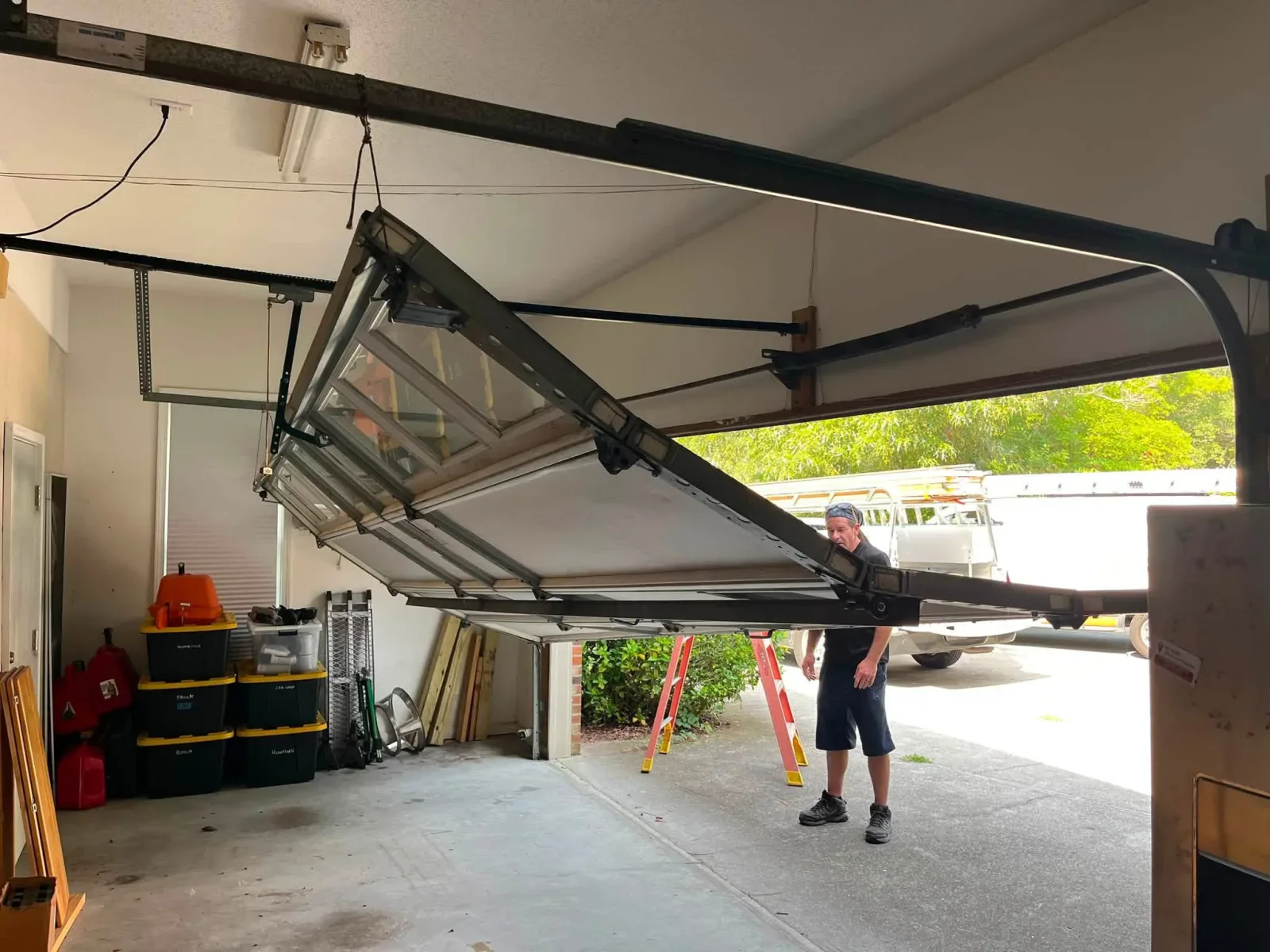
Under the plastic, a connected opener is the same machine: a motor, a rail, a trolley, a belt or chain, travel limits, a force setting, and the photo-eyes at the foot of the tracks that stop a closing door.
All of which means the things that actually go wrong with garage doors go wrong the same way on both. A spring still carries the weight; a worn roller still makes it loud; a nudged sensor still refuses to let it close. No app changes any of that.
So the mechanical questions come first: is the opener sized to the door, is the door balanced, and is the hardware sound. Connectivity is a feature on top of a machine that has to be right anyway.
What connecting it genuinely adds
- KnowingWhether the door is open, from anywhere. This is the one most people actually use.
- Closing it from awayThe answer to “did I leave it open”, without driving back.
- Letting somebody inA one-off opening for a delivery or a relative, instead of a spare remote in a flowerpot.
- A historyWhen the door opened and closed, which is quietly useful in a busy house.
- AlertsLeft-open notifications, which prevent a genuine and common security problem.
Those are real conveniences and worth paying for if you will use them. They are not maintenance, and they do not make a door safer to stand under.
Free Estimates
5-Year Warranty on All Parts & Labor.Five years on parts and labor, every repair and every install. We look at the door with you first, and nothing starts until you approve the number.
What you are taking on
A dependency on your Wi-Fi, on an account, and on a manufacturer’s service continuing to exist. That is not an argument against it — it is a reason to know that an app failure and a door failure are different events.
- A dropped app almost never means a broken door. If the remotes and the wall button still work, nothing mechanical has changed.
- Most app problems are network problems: the garage is the far corner of the house for Wi-Fi, behind a metal door and often a brick wall.
- A factory reset comes last, not first, because it costs you every pairing in the house.
- An older opener can often be connected with an add-on device rather than replaced, which is worth asking before anybody buys a new motor.
The safe checklist for a connection that has stopped is its own guide, and it is deliberately ordered so the expensive steps come last.
How to decide, and what we do
If you have ever driven back to check the door, buy the connected one. If the appeal is closing it from the office or letting a delivery in, buy the connected one. If neither describes you, the money is better spent on the mechanical side of the job.
When we come out, we check the pairing, the opener and the door before anybody buys a part, and we say plainly when an add-on would do what a new opener was being considered for. Whatever the answer, it goes on the written estimate first, with what each choice gets you, and the invoice matches the number you approved.
Free Estimates · a person answers 24/7
5-Year Warranty on All Parts & Labor.Five years on parts and labor, every repair and every install. Call, or send the form and a person calls you back.
Sources
- Chamberlain Group — LiftMaster, Chamberlain and myQ support
- The Genie Company — support and homeowner resources
- DASMA — Technical Data Sheets (Door & Access Systems Manufacturers Association)
All sources read . Linked so you can check them rather than take our word for it.
Written from the manufacturers’ own published guidance — every source is linked above.
What you can count on
- Upfront pricing. The price is on the estimate you approve before work starts, and the invoice matches it.
Straight answers
Questions people ask about this.
Is a smart opener worth it?
Can I make my existing opener smart?
The app stopped working. Is the door broken?
The sensor light is blinking.
Describe it however makes sense to you
Read enough? Tell us about the door.
However you describe it is enough — no part names needed. The visit and the written estimate cost you nothing, and nothing starts until you approve the number.
- However you describe it is enough. No part names needed.
- The written estimate is free. Nothing owed if you pass.
- Nobody starts the repair until you approve the number.
Calls Answered 24/7
One call, and the door problem becomes ours.
A person answers 24/7. We look at the door with you first, and the written estimate comes before the work.