Troubleshooting · a guide, not a sales page
Why is my garage door so loud?
Most loud doors are loud for one of four reasons, and three of them are cheap. The sound itself is the useful clue: a rattle, a bang, a squeal and a grinding note come from different places.
The short answer
In short.
Steel rollers with worn bearings are the usual answer — they wobble in the track and pass every bump straight into the door and the opener. After that: loose hardware, dry hinges and bearings, and an opener drive that was never quiet to begin with. A single bang is different from all of these and is worth stopping for.
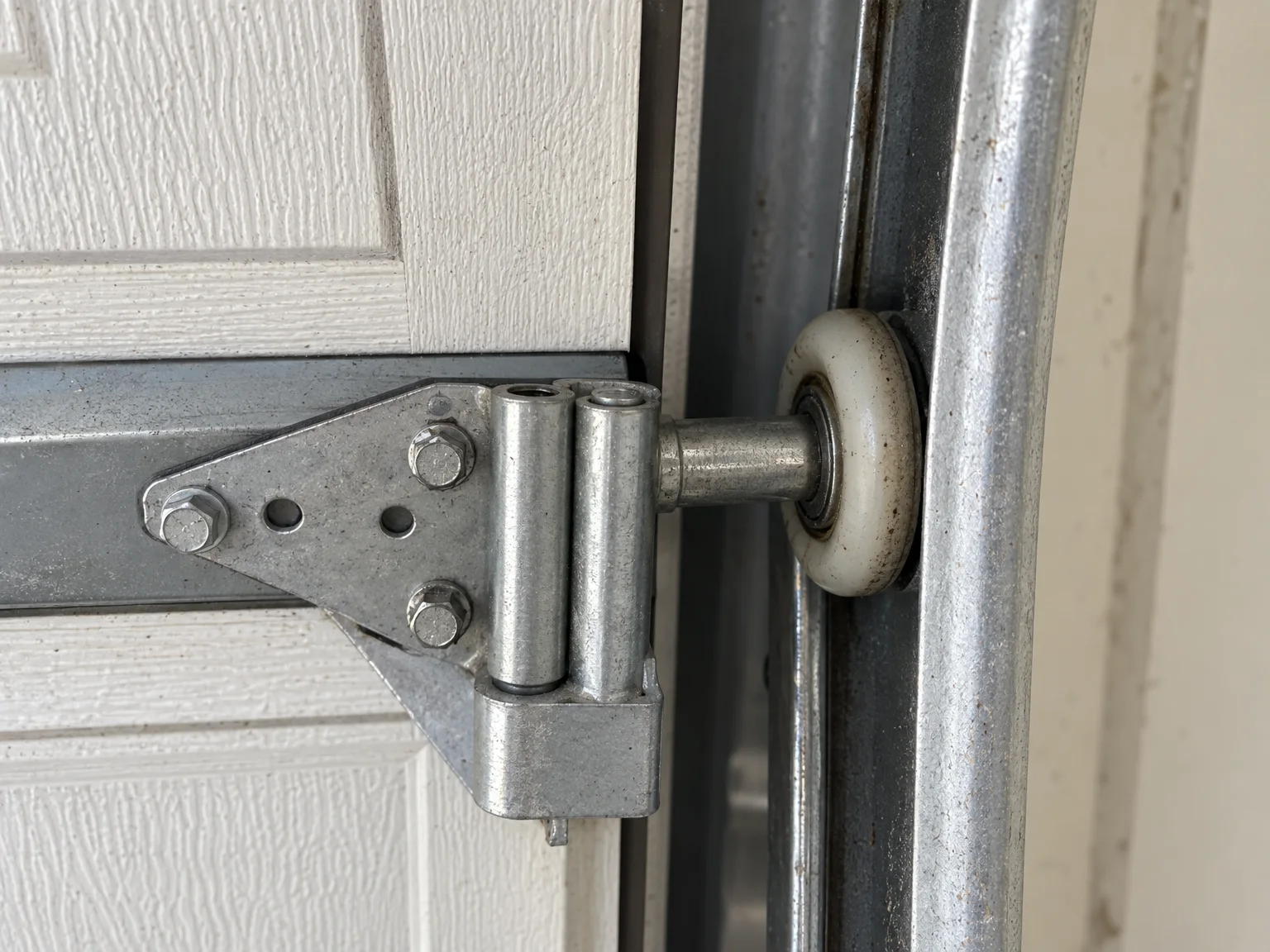
Listen to it once, deliberately
Stand inside, to one side of the door, and run it once. What you are listening for is not how loud it is but what kind of loud it is, and where in the travel it happens.
- A rattle or a rumble all the wayRollers and their bearings, or hardware that has worked loose. The commonest cause by a distance.
- A squeal or a screechDry hinges, dry bearings, or a roller stem running without lubrication.
- A grinding note from the motorInside the opener — the drive gear or the chain, not the door.
- A bang, onceStop. A single loud crack is usually a spring, and the door is now heavier than it looks.
- A thump at one point in the travelSomething specific: a flat spot on a roller, a hinge, a joint in the track.
- A slap or a whip on the ceilingA loose chain or belt on the rail.
Rollers are the reason most doors get loud
A roller is a small wheel with a bearing in it, running in the track and carrying its share of a heavy door thousands of times. When the bearing wears, the wheel stops rolling cleanly and starts skidding and wobbling instead.
That wobble is the noise. It also marks the track, loads the hinges sideways and, over enough time, is what puts a door out of true. Which is why a loud door is worth attention before it becomes a door that binds.
Nylon rollers run quieter than bare steel, and on a door that shares a wall with a bedroom that difference is the whole point of the job. What the door needs goes on the written estimate before anything is changed.
Free Estimates
5-Year Warranty on All Parts & Labor.Five years on parts and labor, every repair and every install. We look at the door with you first, and nothing starts until you approve the number.
What is safe to do yourself
- Look along the tracksFrom a distance, for a roller sitting oddly or a bracket standing away from the wall.
- Check for obvious loose boltsHinges and brackets work loose over years of cycling. Snug is the aim; over-tightening pulls hardware into the section.
- Lubricate the moving metalHinges, roller stems and bearing plates, sparingly, with a product made for garage doors. Follow whatever the maker of your door says.
- Leave the track dryThe track is a guide, not a bearing surface. Grease in a track collects grit and makes matters worse.
- Leave the spring, cables and drums aloneThey hold the door’s weight. That is trained work, and the makers say so themselves.
If the noise survives clean hardware and lubrication, the parts themselves have worn and the fix is replacement rather than adjustment.
When loud is a warning rather than a nuisance
A noise that has changed character recently deserves more respect than one that has been there for years. New grinding, a new thump at one point, or a door that has become noisy and slow at the same time are all worth a look.
The safety check we do on every visit is where most of this gets caught: auto-reverse tested, photo-eyes aligned, springs and cables inspected, and the door balanced. A door that is out of balance is noisy, and it is also working its opener far harder than it should.
Free Estimates · a person answers 24/7
5-Year Warranty on All Parts & Labor.Five years on parts and labor, every repair and every install. Call, or send the form and a person calls you back.
Sources
- DASMA — Technical Data Sheets (Door & Access Systems Manufacturers Association)
- Clopay — residential garage door service and support
All sources read . Linked so you can check them rather than take our word for it.
Written from the manufacturers’ own published guidance — every source is linked above.
What you can count on
- Same-day service on most repairs.
- Upfront pricing. The price is on the estimate you approve before work starts, and the invoice matches it.
Straight answers
Questions people ask about this.
Why is my garage door so loud?
Will nylon rollers make it quiet?
Can I just oil it and leave it?
What does the warranty cover?
Describe it however makes sense to you
Read enough? Tell us about the door.
However you describe it is enough — no part names needed. The visit and the written estimate cost you nothing, and nothing starts until you approve the number.
- However you describe it is enough. No part names needed.
- The written estimate is free. Nothing owed if you pass.
- Nobody starts the repair until you approve the number.
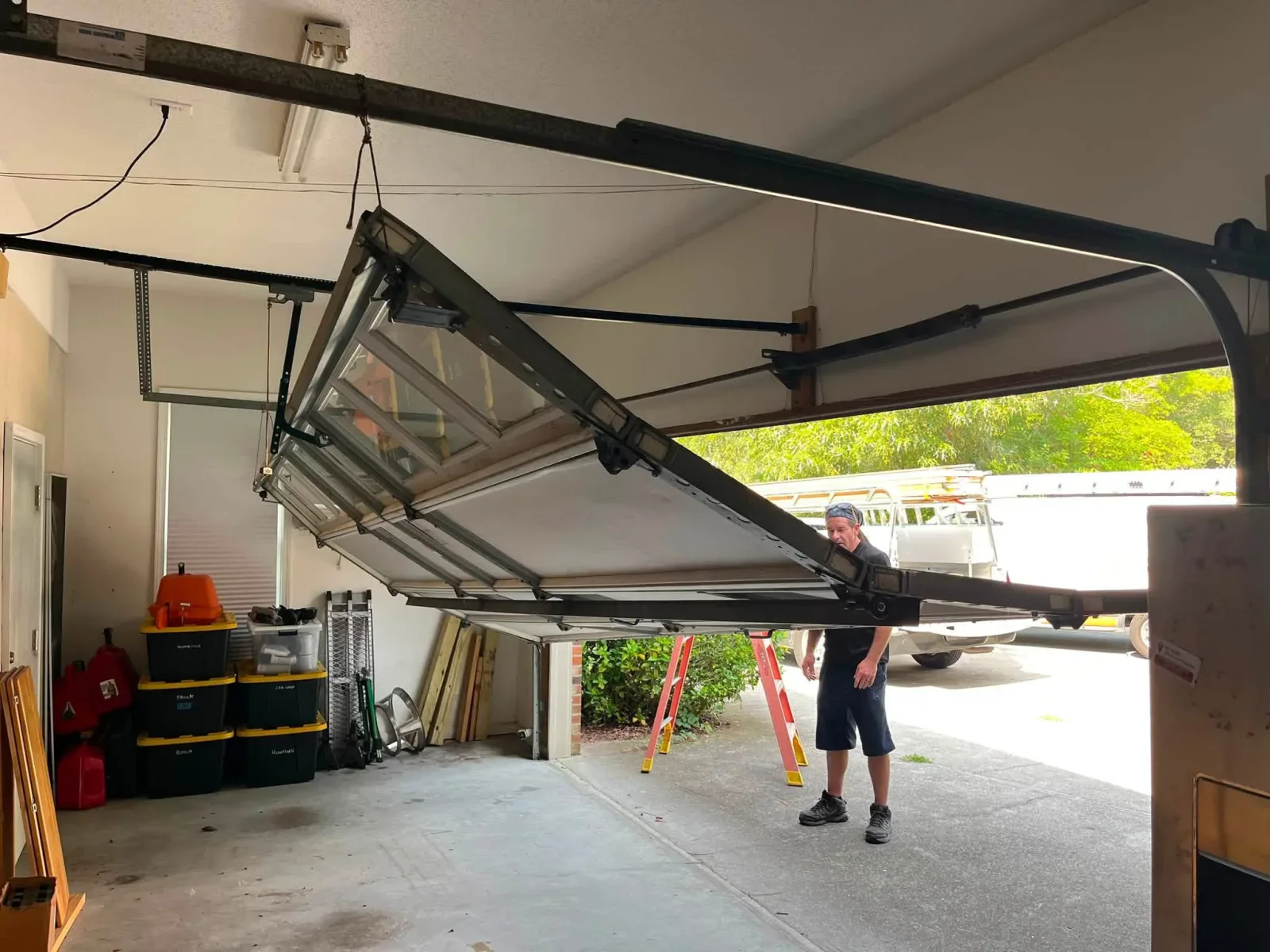
Calls Answered 24/7
One call, and the door problem becomes ours.
A person answers 24/7. We look at the door with you first, and the written estimate comes before the work.