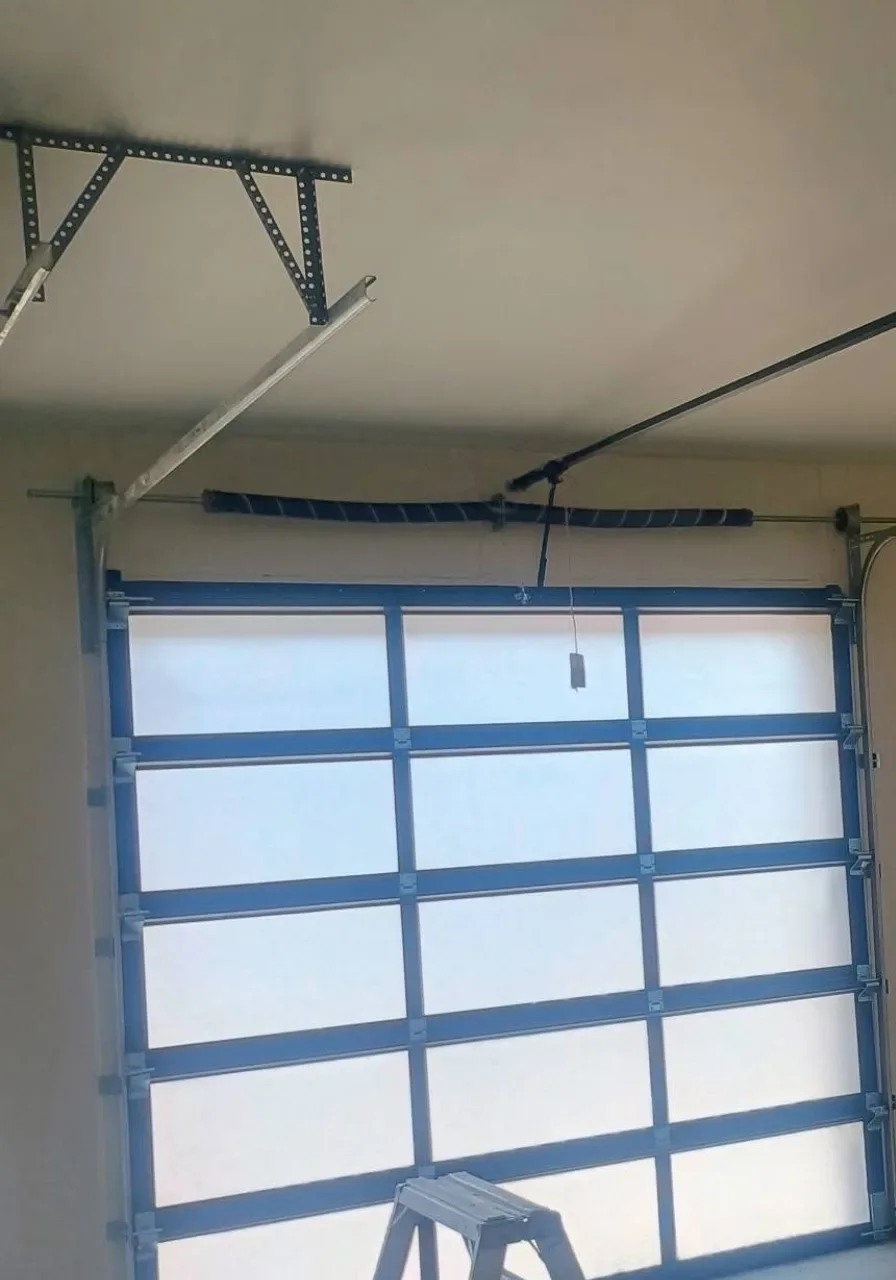
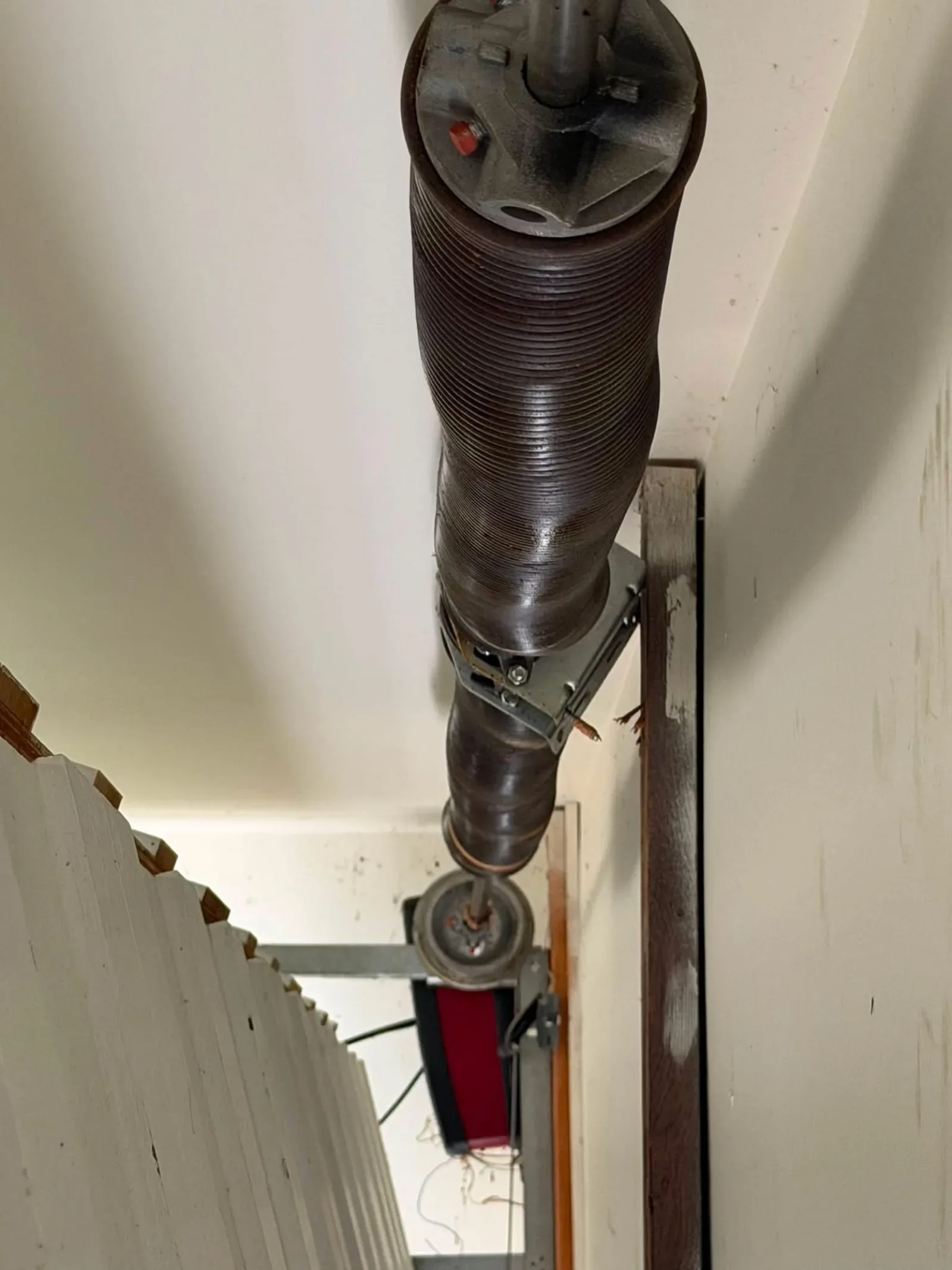
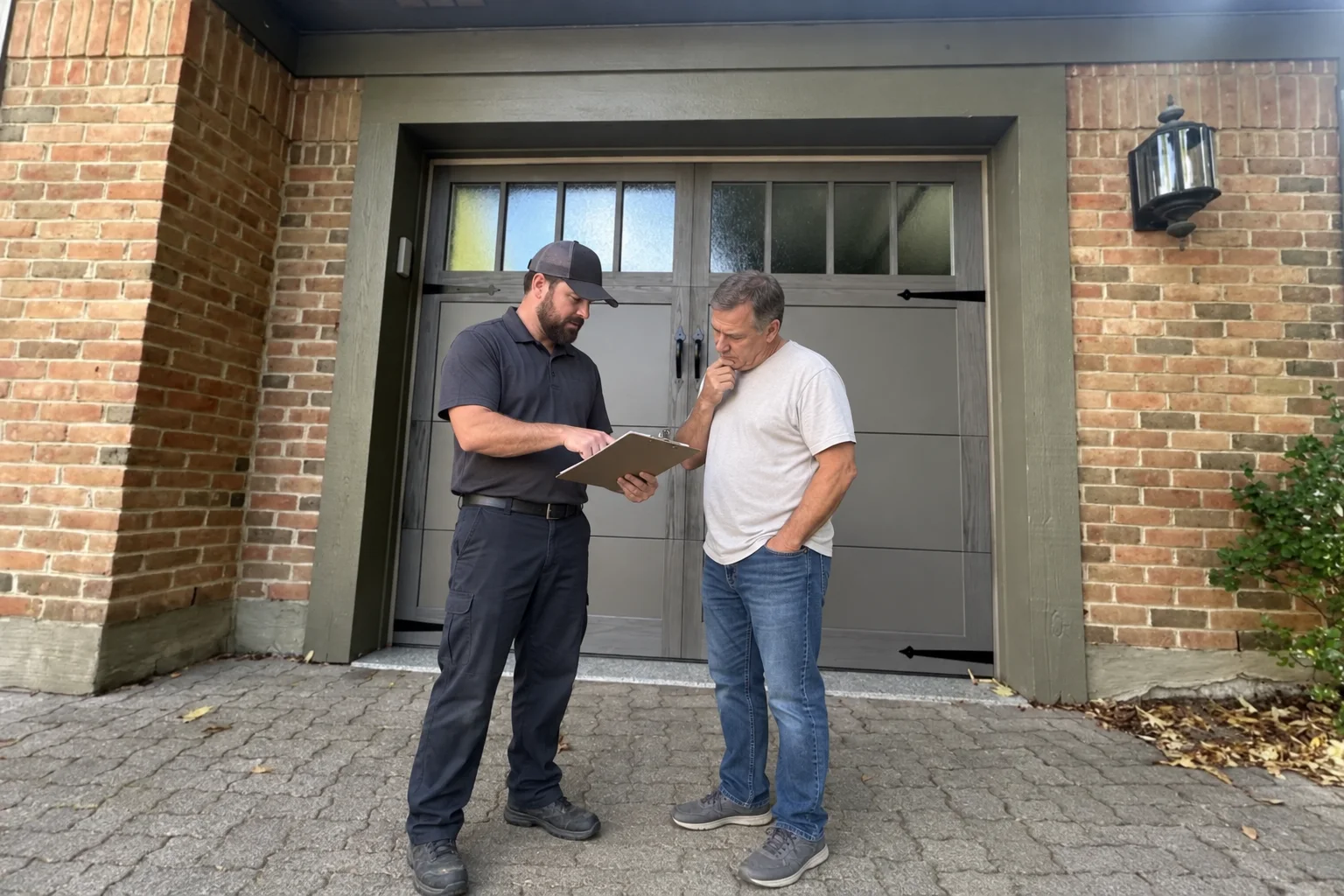
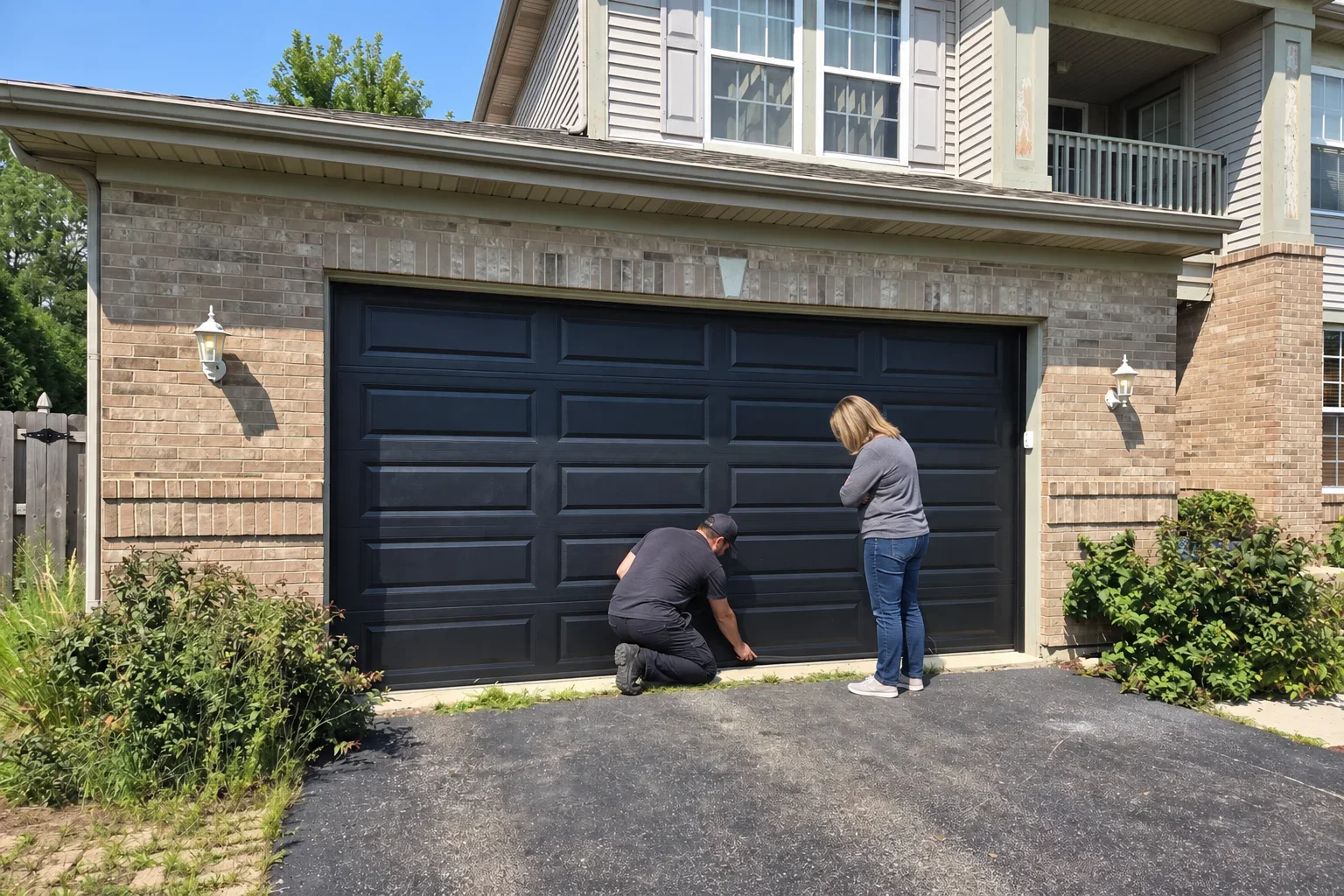
Illustrative scene — gloved technician adjusting the torsion spring above a garage door
Cost Guide

Garage Door Repair Cost: What Actually Sets Your Bill

No repair on your door is priced from a web page — and this explains why that protects you: what physically drives the number, what a technician checks, and what the written estimate has to name before you approve it.

Coppell-Based Mobile service across DFW
Calls Answered 24/7 Tap to call
A Person Reviews It Your request is read before callback
Request Only No payment or work authorized
Residential & Commercial Homes and businesses

The short version: we do not publish repair prices, and the reason is the same reason a number quoted sight-unseen is worth so little. What you pay is set by which component actually failed, whether the door is single or double, the spring system and its cycle rating, the measured weight and construction of the door, how accessible the work is, whether the opener is involved at all, and whether the parts are still made. A technician assesses those in person, and you receive a detailed written estimate that you approve before any work begins.

Most standard repairs are paid after completion. A deposit may be required for special-order products or larger projects and will be shown in the written estimate before you approve the work.

The Written Estimate

What Your Estimate Names, Line by Line

The diagnosis, and the evidence behind it

Which component actually failed, named in plain words, and what the technician observed that shows it — a separated torsion spring, a frayed or slack cable, a bent track section, a bearing that has seized.

A symptom is not a diagnosis. “Door won’t lift” is the same sentence for four different repairs.

Narrow down the symptom →

Exact parts, by specification

Spring dimensions and cycle rating, cable specification, roller and bearing type, opener manufacturer and model — not “a spring” or “hardware”.

Two estimates that both say “spring replacement” can describe genuinely different parts with genuinely different service lives.

Spring replacement service →

Paired components, included or excluded

Whether the second spring, both cables, and the drums are in scope or left in place — stated either way, so nothing is assumed.

On a paired counterbalance the surviving spring has absorbed the same cycles as the one that broke.

Cable repair service →

Labor and the service call, listed separately

The visit and the work shown as their own components rather than folded into one lump figure, so the estimate can be compared line by line against anyone else’s.

Any after-hours component, if the work happens outside normal hours, is shown as its own line.

Describe your job →

Site conditions that have to be handled first

A door that is off its track, a section that is bound against the jamb, or restricted headroom may have to be secured before the actual repair can begin.

That work belongs on the estimate before you approve it, not as a surprise once the technician is on the ladder.

Off-track doors →

What is covered, and what keeps it from repeating

The 5-Year Warranty on All Parts & Labor, stated in writing with the work it applies to.

What maintenance the door needs afterward, and what would legitimately change the scope if something is found once the cover is off.

Maintenance checklist →

Opener work follows the same rule for the same reason: repair versus replacement scope varies too much for any honest generalisation. The opener cost guide walks through exactly what changes those quotes instead.

Read the Fine Print

Why a Phone Price Is Unreliable — and What the Technician Checks Instead

A low number given before anyone has seen the door is not a discount; it is an estimate of a job that has not been diagnosed yet. Four things make it unreliable, and each one is something an on-site assessment settles:

  • 01 The failure is often not where the symptom is. A door that stalls halfway can be a counterbalance problem, a track problem, or an opener problem, and a number given over the phone has already guessed which one.
  • 02 The counterbalance has to match the measured door weight and lift geometry — not an address, not a photo, not a door size typed into a form. Insulated, glazed, and solid-wood doors of the same width load the springs very differently.
  • 03 A driveway photo shows the outside of a closed door. Cable condition at the drum, bearing wear, hinge and roller condition, track alignment, and spring cycle history are all inspection findings.
  • 04 One broken part is frequently the visible end of a set. Quoting the part you can name from a phone call, and discovering the rest later, is exactly how a low number becomes a higher bill.

The check itself is short and physical: the door is cycled where it is safe to do so, the counterbalance is assessed against the door’s measured weight, the cables are followed to the drums, the track and rollers are inspected along their run, and the opener is separated from the door as a possible cause. Only then is there anything honest to write down.

Your Door, Your Number

What Actually Sets a DFW Repair Quote

Which part actually failed

A remote battery, a snapped torsion spring, a frayed cable, and a bent track are different jobs with different parts. The diagnosis — not a menu — sets the scope.

Narrow it down →

Door weight and construction

A single-car non-insulated steel door and a double insulated door with glazing load the counterbalance very differently, and the parts must match the actual weight.

Why weight matters →

One part or the connected set

Springs work with cables, drums, and bearings. Replacing a failed spring while its partner and the worn cables stay can mean paying for a second visit soon after.

The counterbalance system →

Parts quality and cycle rating

Springs are rated in open-and-close cycles. A higher-cycle spring costs more up front and works longer — the honest comparison is cycles, not just the sticker.

Ask about cycle ratings →

Access and site conditions

Headroom, a jammed or off-track door that must be secured first, and commercial-duty hardware can all change the work required before repair even starts.

Off-track doors →

Whether the opener is involved

A door fault mistaken for an operator fault changes the whole scope. The opener moves a balanced door; it is not the counterbalance, and a heavy door can make a working opener look failed.

What changes an opener quote →

Parts availability

Discontinued sections, obsolete hardware, and matched panel profiles take longer to source and sometimes cannot be matched at all, which pushes the conversation toward a different scope entirely.

Panel and section work →
Compare Fairly

Six Things Every Comparable Quote Should Name

  1. The diagnosis in plain words: which part failed, and what evidence shows it
  2. Exact parts being installed — spring dimensions or cycle rating, cable spec, opener model
  3. Whether paired components (second spring, both cables) are included or excluded
  4. Labor, service-call, and any after-hours components listed separately
  5. What is warrantied, in writing, and for how long
  6. Whether the quote is contingent on inspection — and what could change it

Two estimates are only comparable when both name those six things. If one of them names none of them, the difference between the two numbers is not telling you what you think it is.

Cost Questions

Garage Door Cost: Honest Answers

Why won’t you quote my garage door repair over the phone?

Because a number attached to the wrong diagnosis misleads in both directions. A door that “needs a spring” may actually need a cable or a drum, and a door with one broken spring may be safest with the matched pair replaced. Anyone willing to name a figure before seeing the door is guessing at the part, the door weight, the spring configuration, and the condition of everything connected to it. We inspect the specific door, write the scope down, and you approve it before any work starts.

How much does garage door spring replacement cost?

The honest answer is that it is set by the door, not by a price list. What moves it: the measured weight and construction of the door, whether the system is torsion or extension, whether one spring or the matched pair is replaced, the cycle rating of the springs being installed, and the condition of the cables, drums, and bearings that work with them. A technician measures and inspects those on site, and you receive a detailed written estimate to approve before anything is installed.

What does the written estimate actually contain?

The diagnosis and the evidence for it, the exact parts by specification, whether paired components are included or excluded, labor and service-call components listed separately, anything that must be made safe before the repair can start, and the 5-Year Warranty on All Parts & Labor. It also names what could legitimately change the scope, so there are no surprises once work begins.

Does homeowners insurance cover garage door repair?

Policies differ. Damage from specific events — a storm, a vehicle impact — may be eligible under some policies, while wear-related failures like a fatigued spring are generally treated as maintenance. Confirm coverage with your insurer; we can document the door’s condition for a claim you file.

When is replacement smarter than repair?

When damage is spread across several sections, when matching parts or panel profiles are discontinued, or when the door itself is at the end of its service life, repair work may be better applied to replacement. That is a condition judgement made at the door, not a calculation from a national table.

How We Arrive at Your Number

  1. You describe what changed — the sound, the movement, when it started. Calls are answered 24/7, and you can also send the details online.
  2. A technician assesses the door in person: the failed component, the counterbalance against the door’s weight, the connected hardware, and whether the opener is part of it.
  3. You receive a detailed written estimate naming the diagnosis, the exact parts, what is included and excluded, and the 5-Year Warranty on All Parts & Labor.
  4. You approve the scope. Nothing is installed before you do.

Weighing a repair against a new door instead? The is-a-new-door-worth-it guide covers how to compare two proposals on the same terms, and new door installation covers what that scope involves.

// Call or Request Online

Tell Us What Changed — A Technician Assesses, Then You Get It in Writing.

Calls answered 24/7 · Mobile crew, all of DFW

Call Now Request Service
Your privacy matters. Analytics is on by default (in Texas) so we can improve the site; advertising cookies stay off unless you accept all. “Necessary only” turns analytics off too. See our Privacy Policy and Texas privacy rights.
Cookie choices. Analytics helps us improve this page; ad cookies stay off unless you accept. Privacy