Buying guide · a guide, not a sales page
What makes a window energy efficient?
Not one thing. The whole unit — frame, glass and seals — and then how it is fitted to the opening. The label on the glass is how two units are compared; the fit is why two identical windows can behave differently.
The short answer
In short.
Every certified window carries an NFRC label with five ratings. Two of them decide whether it is ENERGY STAR certified: U-factor, which is how well it insulates, and solar heat gain coefficient, which is how much of the sun’s heat it lets through. What the label cannot tell you is how well the unit will be fitted, and a poorly fitted window is drafty whatever the label says.
The label on the window
The National Fenestration Rating Council is a third-party non-profit that certifies how windows, doors and skylights perform, so two units can be compared on the same basis. It does not decide which are good or bad, set a minimum, or require any level — it measures and publishes. Five ratings appear on the label.
- U-factorThe rate of heat transfer — how well the unit insulates. Values generally run from 0.25 to 1.25, measured in Btu/h·ft²·°F. Lower insulates better.
- Solar heat gain coefficientThe fraction of the sun’s energy the unit lets through. Measured 0 to 1, typically 0.25 to 0.80. Lower means less solar heat comes in — which is the one that earns its keep in a North Texas summer.
- Air leakageThe rate air passes through the joints in the unit, in cubic feet per minute through a square foot of window. Lower is tighter, and most industry standards and building codes require 0.3.
- Visible transmittanceHow much light comes through. Measured 0 to 1, generally 0.20 to 0.80. Higher is brighter — and it moves in the opposite direction from a low solar heat gain, which is the trade you are actually making.
- Condensation resistanceHow well the unit resists water building up on it, scored 0 to 100. Higher resists better.
What ENERGY STAR adds to that
ENERGY STAR is the part that says which numbers are good enough. A certified product is made by an ENERGY STAR partner, is independently tested and certified by the NFRC, and has NFRC ratings that meet the guidelines the EPA sets.
Two details are worth carrying into a showroom. Certification is **by climate zone** — a window certified for a cold zone is not the same specification as one certified for a hot one, and yours is worth looking up rather than assuming. And qualification rests on **U-factor and solar heat gain coefficient only**; the other three ratings are on the label to inform you, not to decide certification.
Doors are judged differently again. Many have no glass at all, and even a sliding patio door has far less glass relative to its frame than a window does, so a door can insulate better than a window can. Their criteria are set by how much glass they have — the glazing level — alongside the NFRC ratings.
Free Estimates
5-Year Warranty on All Parts & Labor.Five years on parts and labor, every repair and every install. We look at the door with you first, and nothing starts until you approve the number.
Frame and glass, in plain words
ENERGY STAR describes the framing materials certified windows come in, and none of them is the automatic answer.
- FiberglassStrong, durable, low maintenance and a good insulator. The sections may be hollow or filled with foam.
- VinylLow maintenance, good thermal insulation. Hollow or foam-filled, and a wide sill may be reinforced with metal or wood.
- AluminumDurable, low maintenance, and normally made with recycled content. The design usually includes a thermal break, so heat does not travel straight through the metal.
- WoodStrong, a good insulator, and usually the choice where a neighborhood expects it. The outside face is often clad in aluminum or vinyl to cut the maintenance.
- Combination and compositeDifferent materials used in different parts of the frame, or blended in manufacture, to get the performance without the drawbacks of any one of them.
No technology is required for certification. Any of these can carry ratings that qualify, which is why the model and its label are the comparison rather than the material on its own.
Why the fit matters as much as the window
This is the sentence ENERGY STAR itself puts in front of buyers: even the best windows, doors and skylights can be drafty if they are poorly installed.
Two practical consequences. The space between the window frame and the rough opening in the wall has to be insulated as the unit goes in — that gap is where a good window quietly becomes an average one. And manufacturers publish installation instructions with the product for a reason: some will void the warranty if the unit was not fitted the way they specify.
It is a fair question to put to anyone quoting you, ours included: how is the gap treated, and are you fitting it the way the maker’s instructions say.
What to ask before you buy
- The exact model, not the brandRatings belong to a product line, not to a maker. A number quoted for one line says nothing reliable about another from the same company.
- The NFRC label ratings for that unitU-factor and solar heat gain coefficient first. Ask to see the label, not a summary of it.
- Whether it is certified for your climate zoneLook yours up rather than take it on trust — the zone changes which specification qualifies.
- How the opening will be sealedSpecifically, how the gap between frame and rough opening is insulated.
- Whether the maker’s instructions are being followedAnd what that means for the warranty.
- What the written estimate namesThe unit, the opening and the work. A quote that names none of them cannot be compared with one that does.
Where our line is
We sell, install and repair windows of every major brand rather than one maker’s line, and we hold no manufacturer certification-program membership that would let us claim otherwise. Two things we do not take on: broken or fogged glass and insulated-glass units, and solar screens.
Free Estimates · a person answers 24/7
5-Year Warranty on All Parts & Labor.Five years on parts and labor, every repair and every install. Call, or send the form and a person calls you back.
Sources
- ENERGY STAR — “Independently Tested and Certified Energy Performance” (read 12 September 2026)
- ENERGY STAR — “What makes it ENERGY STAR?”, residential windows, doors and skylights (read 12 September 2026)
All sources read . Linked so you can check them rather than take our word for it.
Written from the manufacturers’ own published guidance — every source is linked above.
What you can count on
- Upfront pricing. The price is on the estimate you approve before work starts, and the invoice matches it.
Straight answers
Questions people ask about this.
Is a lower U-factor always better?
Which rating matters most in North Texas?
Does double glazing make a window ENERGY STAR certified?
Can you fit a window I buy myself?
Describe it however makes sense to you
Read enough? Tell us about the window or door.
Tell us which window or door it is and what you want done, even if you don’t know what anything is called. This starts a conversation, not an appointment.
- However you describe it is enough. No part names needed.
- The written estimate is free. Nothing owed if you pass.
- Nothing is ordered or started until you approve the number.
Calls Answered 24/7
One call, and the window or door is ours to sort out.
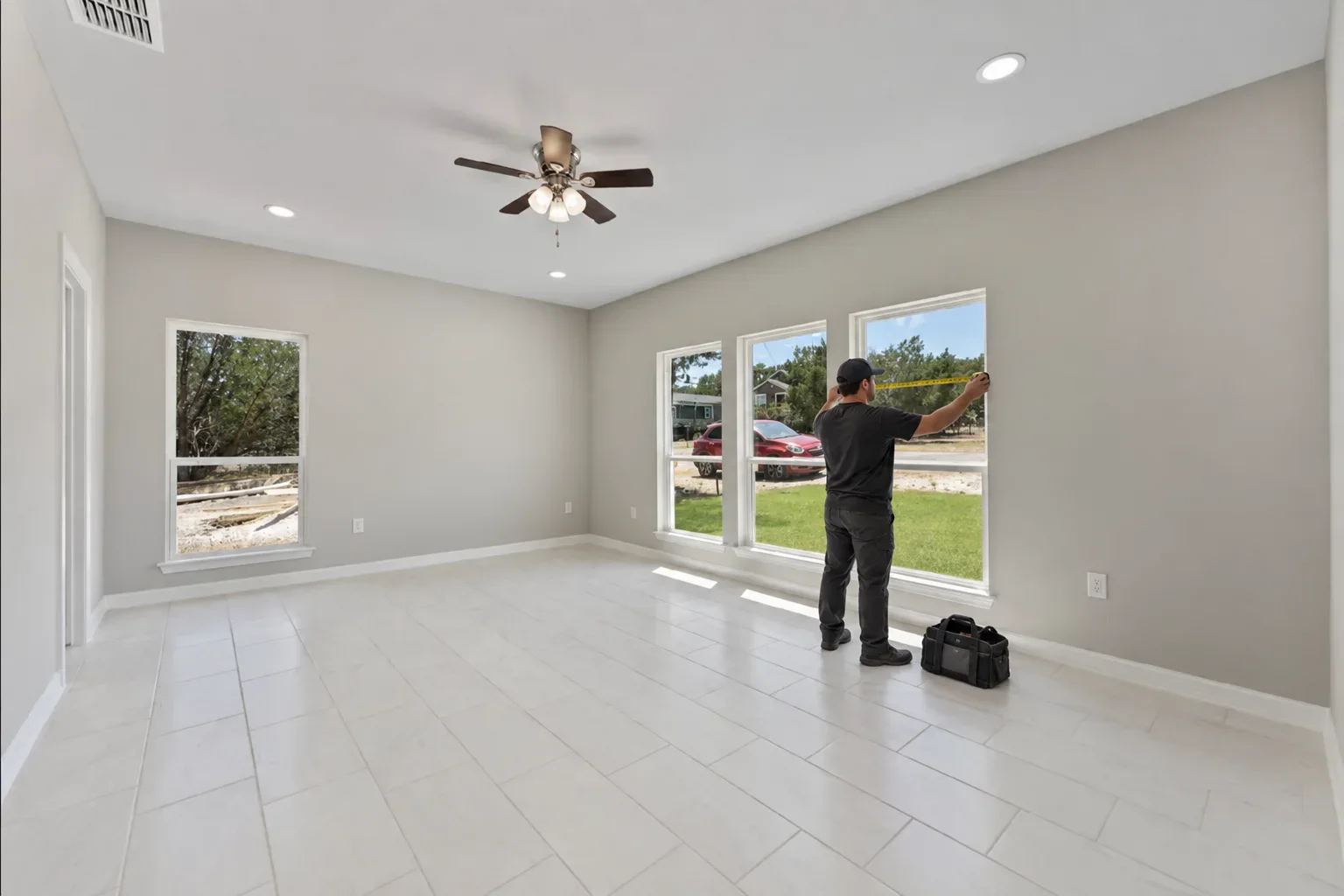
A person answers 24/7. A technician measures the opening with you first, and the written estimate comes before anything is ordered.