Buying guide · a guide, not a sales page
Types of garage doors: a plain guide to the choices
There are two different questions hiding in “what type of door”: how it opens, and what it looks like. Almost every house gets the same answer to the first, which means the real choice is the second.
The short answer
In short.
Nearly every residential garage in DFW has a sectional door: four or five horizontal sections that bend round a curved track and sit under the ceiling. Rolling steel doors, one-piece tilt-up doors and side-sliding doors exist, and mostly turn up on commercial buildings or older houses.
Once the mechanism is settled, the families are the choice: raised panel, carriage house, modern flush, full-view glass and aluminium, and insulated steel — which is a construction rather than a look.
How it opens: the mechanisms
- SectionalHorizontal sections, rollers in a track, springs above the opening. The default residential door, and what nearly all of this site is about.
- Rolling steelA single curtain of interlocking slats that rolls onto a barrel above the opening. Warehouses, service bays, storage.
- One-piece tilt-upA single slab that swings out and up on pivots. Found on older houses; it needs room to swing.
- Side-slidingRuns sideways along a track rather than lifting. Useful where there is no headroom at all.
- High-lift and vertical-liftA sectional door with the track arrangement changed so the door goes further up before turning in — for a tall garage, a lift, or a workshop.
- High-speedCommercial doors built to open and close quickly to control traffic, temperature or dust.
If you are choosing a door for a house, it is a sectional, and the rest of this page is about what kind.
What it looks like: the five families
These are the five we install, and the differences that survive once the photograph is out of the way.
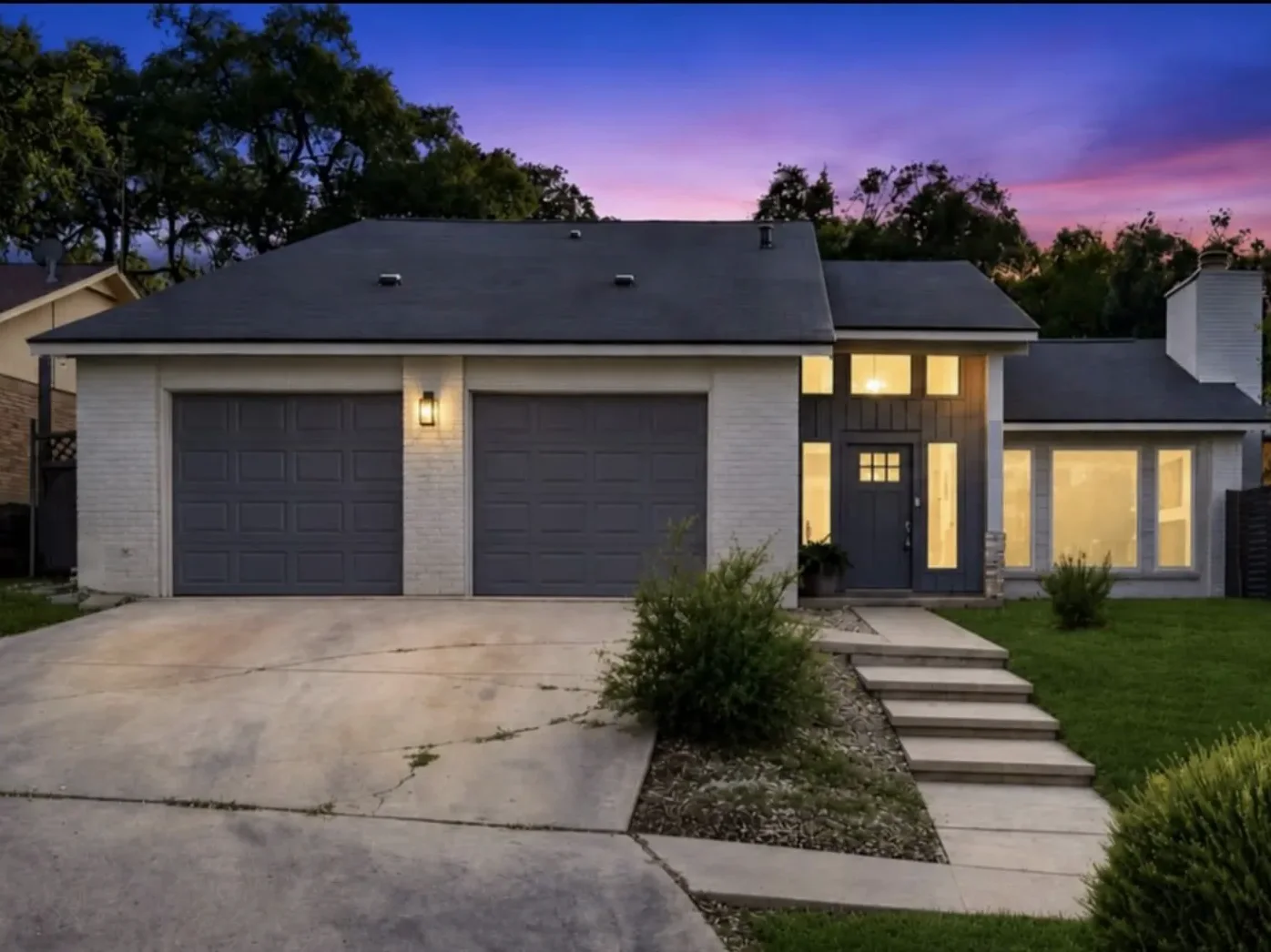
- Traditional raised panelThe familiar rows of rectangles. Quiet, conventional, suits most brick elevations.
- Carriage houseThe look of doors that swing, on a door that lifts. Often with cross-bracing and decorative hardware.
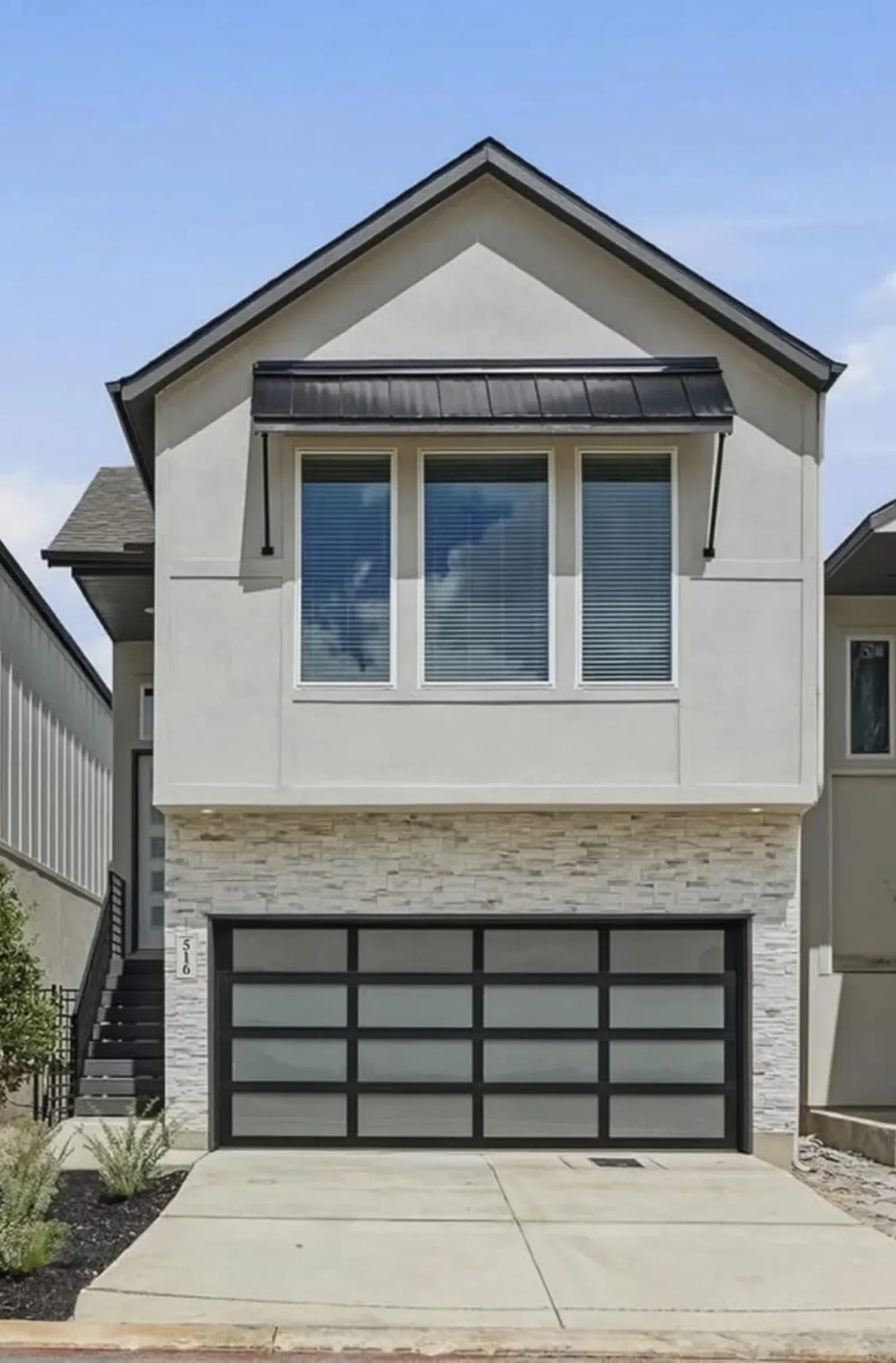
- Modern flushFlat or lightly grooved faces, long lines, minimal hardware. Reads as architecture rather than as a garage door.
- Full-view glass and aluminiumAn aluminium frame with glass panels. Light into the garage, and a strong architectural statement.
- Insulated steelA construction rather than a look — layers of steel and insulation, available across the other families.
Each of those has its own page with what it actually is, which houses it suits, and what shapes the scope of the job.
Free Estimates
5-Year Warranty on All Parts & Labor.Five years on parts and labor, every repair and every install. We look at the door with you first, and nothing starts until you approve the number.
The questions that decide it
- What does the house want? The door is often the largest single element of a front elevation, so it either agrees with the house or argues with it.
- Is the garage a room? If somebody works, trains or spends time in it, insulation and quietness stop being optional.
- Which way does it face? A west-facing door in Texas has a harder life than a north-facing one.
- How wide is the opening? Width drives weight, and weight drives the counterbalance specification.
- What is above and behind it? Headroom, storage and a lift all constrain the track arrangement before style enters the conversation.
- Windows or not? Light into the garage against privacy and one more thing to clean.
Before you replace anything
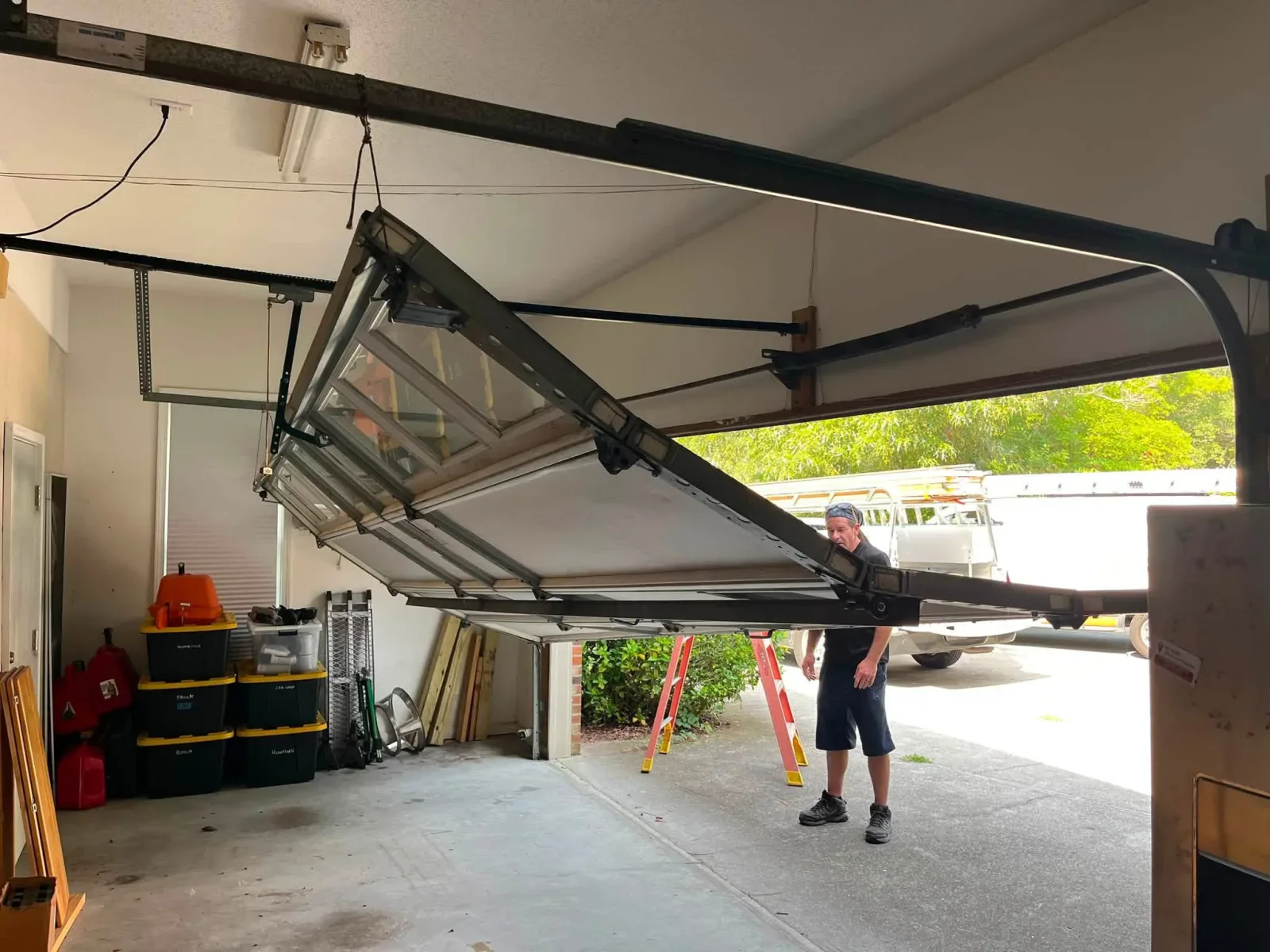
We repair first, and we say so. A cracked section, a bent track, worn rollers or a tired opener is a repair, and one section can often be replaced rather than the whole door.
When a door genuinely is at the end of its life, the replacement goes on the written estimate as a choice next to the repair, with what each one gets you — never as a push. The measurement is ours to do, and you do not need a model number or a line name to start the conversation.
Free Estimates · a person answers 24/7
5-Year Warranty on All Parts & Labor.Five years on parts and labor, every repair and every install. Call, or send the form and a person calls you back.
Sources
- Clopay — residential garage door service and support
- Amarr — residential garage door FAQs
- C.H.I. Overhead Doors — help and support
- DASMA — Technical Data Sheets (Door & Access Systems Manufacturers Association)
All sources read . Linked so you can check them rather than take our word for it.
Written from the manufacturers’ own published guidance — every source is linked above.
Related reading
Where this goes next.
What you can count on
- Upfront pricing. The price is on the estimate you approve before work starts, and the invoice matches it.
Straight answers
Questions people ask about this.
What type of garage door do most houses have?
What is the difference between a sectional and a rolling steel door?
Is insulated a style?
Do you have to replace the whole door?
Describe it however makes sense to you
Read enough? Tell us about the door.
However you describe it is enough — no part names needed. The visit and the written estimate cost you nothing, and nothing starts until you approve the number.
- No model number needed. The opening and the house are enough to start.
- The written estimate is free. Nothing owed if you pass.
- Nothing is ordered until you approve the number.
Calls Answered 24/7
One call, and the door problem becomes ours.
A person answers 24/7. We look at the door with you first, and the written estimate comes before the work.