Troubleshooting · a guide, not a sales page
Garage door won’t open: the common causes
A door that will not open is either not being told to move, or is being held by something that has failed. Those two possibilities look completely different from the inside, and you can tell them apart from where you are standing.
The short answer
In short.
If the motor runs and nothing moves, the door and the opener have come apart — a broken spring, a disconnected trolley, or a door jammed in its tracks. If nothing happens at all, start with power, the lock and the remote.
The one thing worth knowing before you start: if you heard a bang from the garage recently, stop. That sound is usually a spring, and a door with a broken spring is far heavier than it looks.
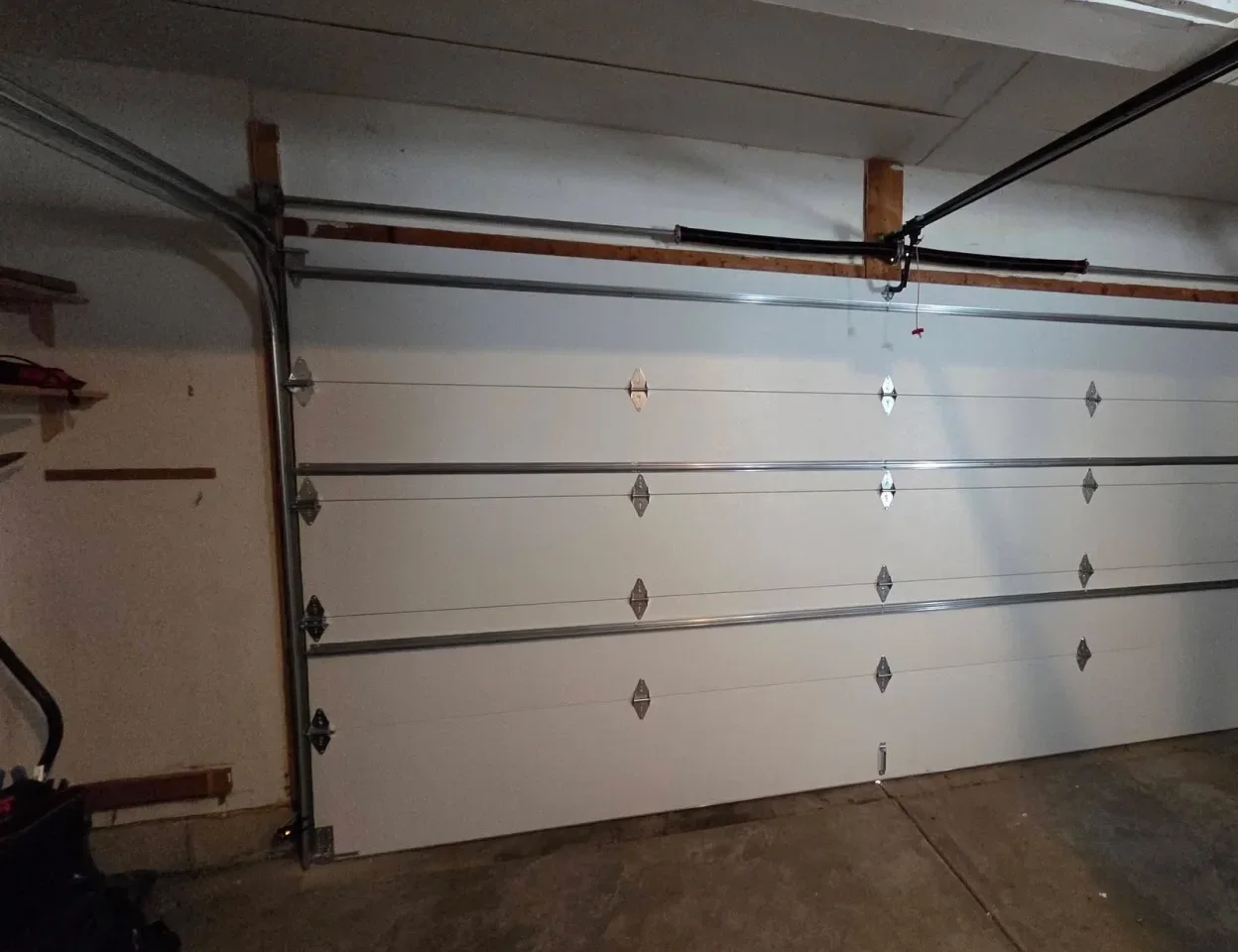
First: did you hear a bang, at any point?
A single loud crack from the garage — sometimes days earlier, sometimes while the house was empty — is the sound of a torsion spring letting go. Afterwards the door will often not open at all, or will open a few inches and stop.
The spring is what carries the weight of the door. Without it the opener is trying to lift the whole thing on a motor sized to lift almost nothing, and the door is a genuinely heavy object held up by very little.
- Stop using the opener. Each attempt strains the rail, the gears and the cables.
- Do not try to lift the door by hand.
- Keep people and cars out of the opening, and do not park under it.
- Look, from a safe distance, for a gap in the coil of the spring on the shaft above the door. A clean break is usually visible from across the garage.
If that is what you can see, the article on the counterbalance is worth two minutes before the visit.
The motor runs but the door does not move
This is the most misread symptom in the trade, because a working motor sounds like a working opener. What it actually means is that the opener has lost its grip on the door, or the door cannot go anywhere.
- A broken springThe commonest cause. The opener turns, the door stays.
- The trolley is disconnectedSomebody pulled the emergency release — during a power cut, or by accident — and the carriage has not been re-engaged.
- A cable off its drumOne side of the door is held and the other is not, so it binds in the opening.
- The door is jammedA roller out of the track, a bent section of track, or something wedged against the door.
- Stripped drive gearInside the opener rather than on the door — a grinding note with no movement.
None of those five is fixed by running the opener again, and four of the five get worse if you do.
Free Estimates
5-Year Warranty on All Parts & Labor.Five years on parts and labor, every repair and every install. We look at the door with you first, and nothing starts until you approve the number.
Nothing happens at all
When the wall button and the remote both do nothing, work outwards from the simple things.
- PowerA tripped breaker, a switched-off socket, a GFCI outlet that has popped. The opener light is a fair indicator.
- The wall lock or vacation modeMany openers and wall consoles have a lock that disables the remotes on purpose. It is easy to press without noticing.
- The remoteA flat battery, or pairing that has dropped. The wall button tells you which side the problem is on.
- The safety beamSome openers refuse to run in either direction while the photo-eyes are unhappy, and signal it by blinking.
- A manual slide lockOn older doors, a bar through the track. Forcing a locked door bends things.
If the wall button works and the remote does not, it is a pairing or battery question and the guide to programming a remote covers it.
If the car is shut inside
Say so on the phone. A trapped car is one of the few things that genuinely changes how a job is scheduled, and dispatch would rather hear it than work it out later.
If the door is fully closed and you understand the risk, the emergency release lets a door be lifted by hand — but only with the springs intact. On a door with a broken spring, pulling that cord takes the opener out of the equation and leaves the full weight to whoever is holding it. The manual-opening guide sets out when that is safe and when it is not.
What to tell us
- What you hear when you press the buttonNothing, a click, a hum, a grinding noise, or the motor running normally.
- Whether you ever heard a bangEven if it was last week.
- Whether the door has moved at allNot at all, a few inches, or crooked.
- Whether a car is insideAnd whether you need it today.
- The address and a photographOne of the whole opening from a safe distance.
Free Estimates · a person answers 24/7
5-Year Warranty on All Parts & Labor.Five years on parts and labor, every repair and every install. Call, or send the form and a person calls you back.
Sources
- DASMA — Technical Data Sheets (Door & Access Systems Manufacturers Association)
- Amarr — residential garage door FAQs
All sources read . Linked so you can check them rather than take our word for it.
Written from the manufacturers’ own published guidance — every source is linked above.
What you can count on
- Same-day service on most repairs.
- Upfront pricing. The price is on the estimate you approve before work starts, and the invoice matches it.
Straight answers
Questions people ask about this.
The motor runs but the door stays put. Is the opener broken?
Can I lift it by hand?
Is my car trapped?
Do you charge to come out?
Describe it however makes sense to you
Read enough? Tell us about the door.
However you describe it is enough — no part names needed. The visit and the written estimate cost you nothing, and nothing starts until you approve the number.
- However you describe it is enough. No part names needed.
- The written estimate is free. Nothing owed if you pass.
- Nobody starts the repair until you approve the number.
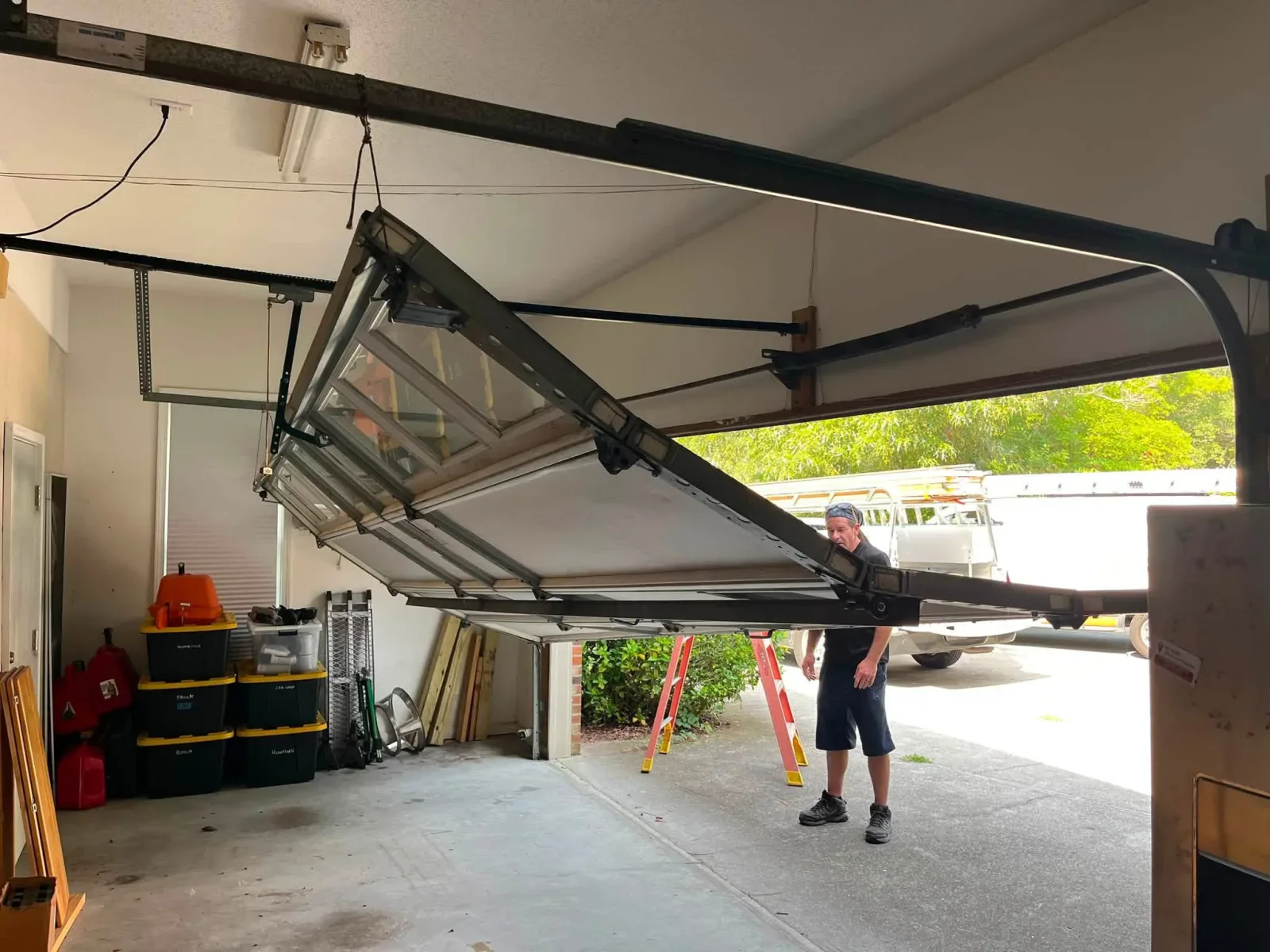
Calls Answered 24/7
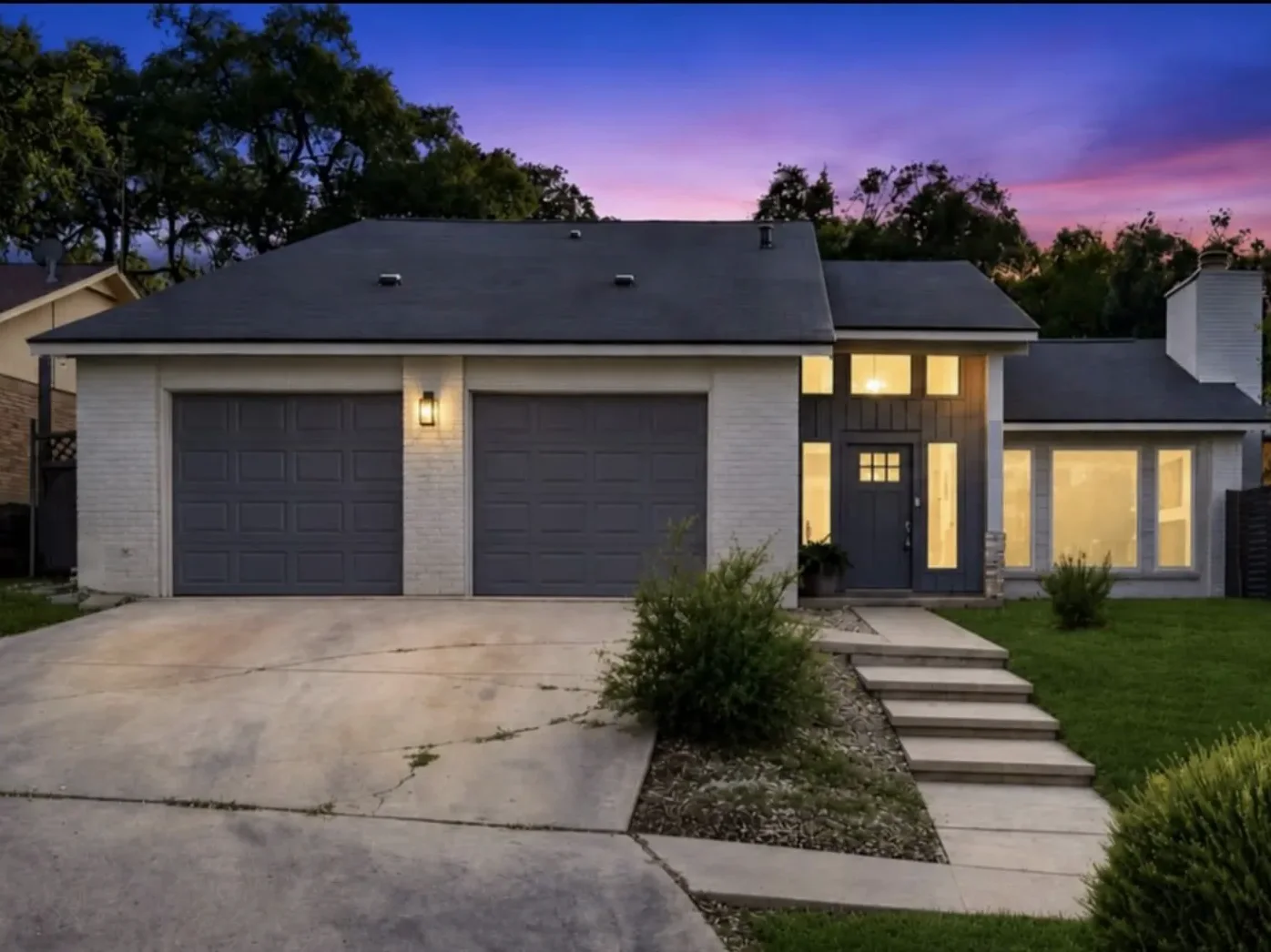
One call, and the door problem becomes ours.
A person answers 24/7. We look at the door with you first, and the written estimate comes before the work.