Repairs · a guide, not a sales page
How long do garage door springs last?
Springs are not measured in years. They are measured in cycles — one up and one down — and two identical springs on two identical doors can be years apart because one house uses the garage as its front door and the other does not.
The short answer
In short.
A torsion spring is specified for a number of cycles by whoever wound it, and it wears out by being used rather than by getting old. Four openings a day and one opening a day are completely different lives for the same part.
Which is why we will not print a number of years here. What we can tell you is what shortens a spring’s life, what the warning signs look like, and why springs are replaced in pairs even when only one has broken.
A cycle, not a calendar
One cycle is the door going up and coming back down. The spring stores energy on the way down and gives it back on the way up, and every one of those cycles takes a little out of the steel.
So the honest answer to how long a spring lasts is: as long as its cycle specification, divided by how often you use the door. A family that comes and goes through the garage four or five times a day gets through the same specification far faster than a household that uses the front door.
Springs also come in different specifications for the same door. A heavier-duty spring costs more up front and buys more cycles, which is the whole subject of the high-cycle guide.
What actually shortens a spring’s life
- How often the door is usedThe dominant factor by a wide margin. Everything else is a detail next to it.
- Whether the door is balancedA door dragging on a worn roller or a tight track makes the spring work harder on every cycle.
- Whether it was specified for the doorA spring wound for a lighter door than yours is working outside its design from the first day.
- RustA damp garage takes the life out of steel. Coated springs resist it better.
- A missing pairOn a two-spring door running with one, the surviving spring is doing a job it was never sized for.
- An opener compensatingTurning the force up so the opener pushes through a heavy door hides the problem and passes the strain along.
Free Estimates
5-Year Warranty on All Parts & Labor.Five years on parts and labor, every repair and every install. We look at the door with you first, and nothing starts until you approve the number.
The warning signs, in the order you notice them
Springs do sometimes fail without notice — a bang, and a door that will not lift. Often, though, the door says something first.
- The door feels heavier than it used to, or the opener sounds like it is straining.
- It opens a few inches, stops, and goes back down.
- It comes down faster than it used to, or lands hard.
- It will not stay where you leave it when the opener is disconnected — though testing that is our job, not yours.
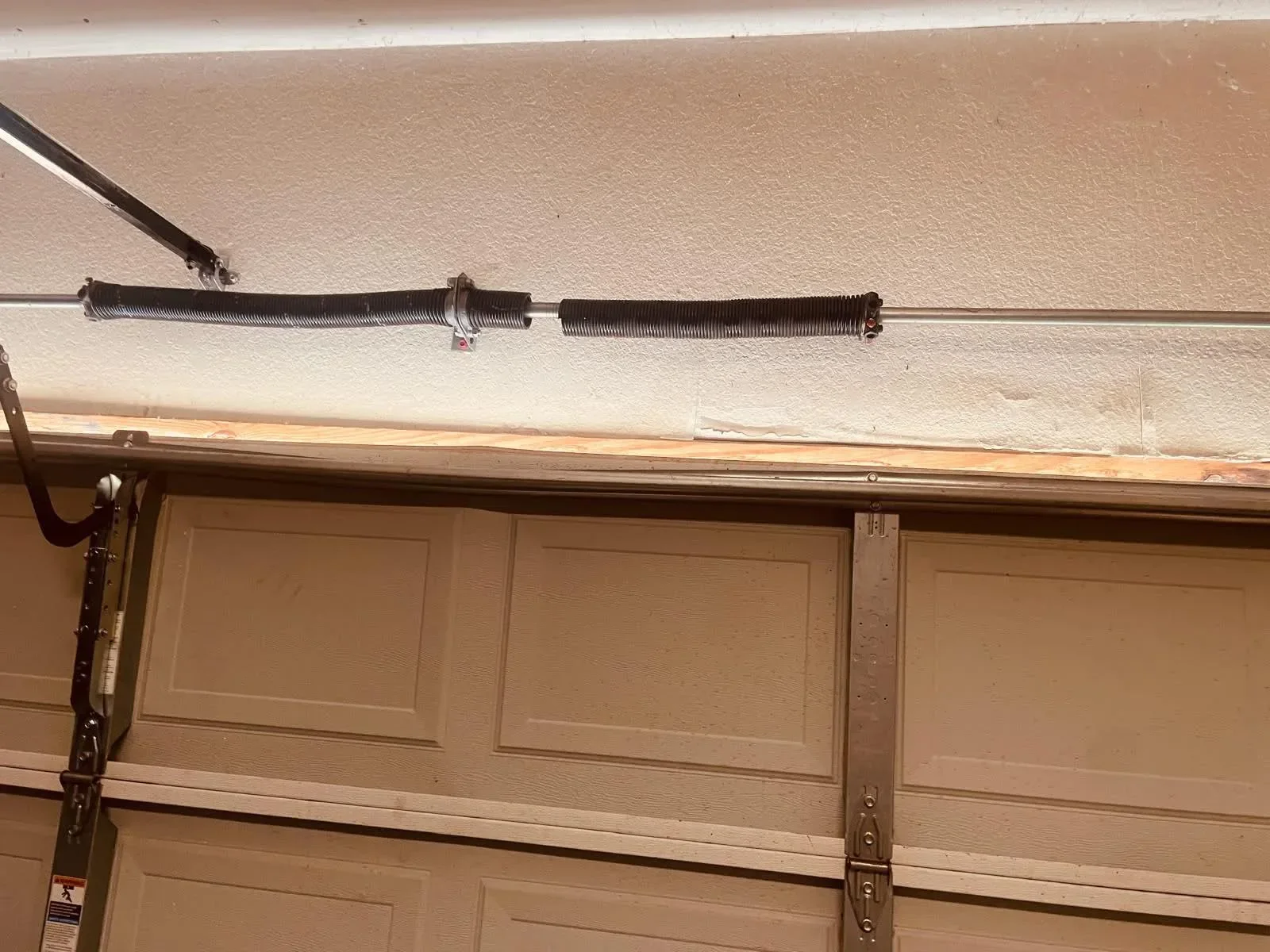
- You can see a gap in the coil on the shaft above the door.
- The cables have gone slack, or one side sits lower than the other.
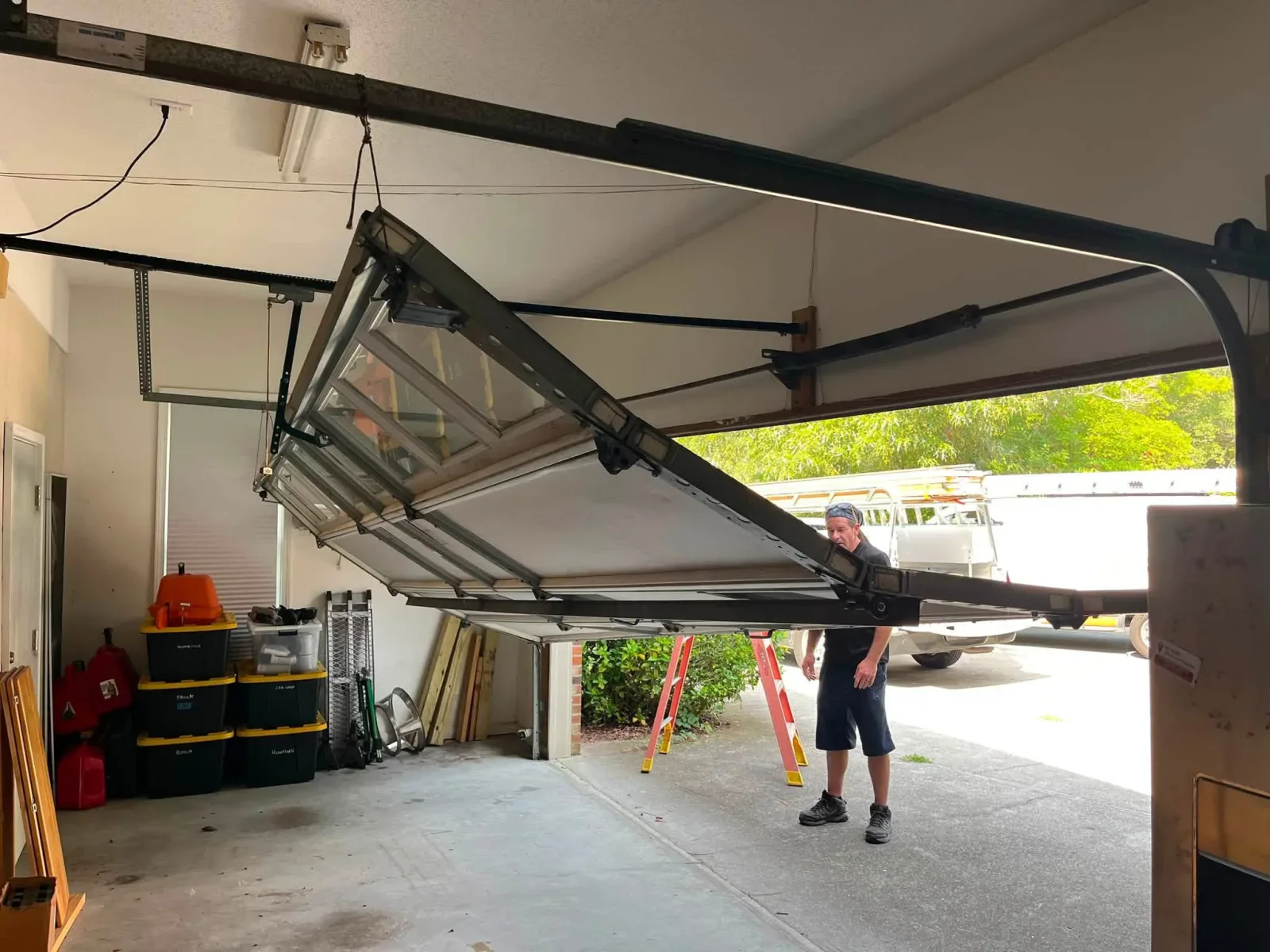
A bang from the garage with nobody near it is the classic version. If that has happened, stop using the opener and do not try to lift the door by hand — the weight the spring was carrying is now yours.
Why both springs are replaced together
On a door with two springs, both have done the same number of cycles at the same specification. When one lets go, the other is not a fresh part that happens to be next to a broken one — it is the same age, with the same history.
Replacing one means paying for the visit twice, and running a mismatched pair in the meantime. That is why the estimate on a two-spring door normally names the pair, and why it says so plainly rather than surprising you with it later.
Wayne Dalton doors are the exception worth knowing about: their own counterbalance runs the springs inside a steel tube above the door rather than on an open shaft, with a device meant to stop the door dropping if a spring goes while it is up. It looks different from inside the garage, and it is documented on the maker’s own site.
What we do on a spring visit
We weigh the door rather than guess it, because the spring specification follows the real weight. Then the pair goes on, the cables and drums are checked, and the door is balanced and tested — auto-reverse, photo-eyes, springs and cables, balance, the four things on the safety check we do on every visit.
The number is on the written estimate before anything starts, and the invoice matches it. Five years on parts and labor, every repair and every install.
Free Estimates · a person answers 24/7
5-Year Warranty on All Parts & Labor.Five years on parts and labor, every repair and every install. Call, or send the form and a person calls you back.
Sources
- DASMA — Technical Data Sheets (Door & Access Systems Manufacturers Association)
- Wayne Dalton — TorqueMaster counterbalance
- Amarr — residential garage door FAQs
All sources read . Linked so you can check them rather than take our word for it.
Written from the manufacturers’ own published guidance — every source is linked above.
What you can count on
- Same-day service on most repairs.
- Upfront pricing. The price is on the estimate you approve before work starts, and the invoice matches it.
Straight answers
Questions people ask about this.
How long do garage door springs last?
One spring broke. Do I have to replace both?
Can I keep using it until someone comes?
What does the warranty cover?
Describe it however makes sense to you
Read enough? Tell us about the door.
However you describe it is enough — no part names needed. The visit and the written estimate cost you nothing, and nothing starts until you approve the number.
- However you describe it is enough. No part names needed.
- The written estimate is free. Nothing owed if you pass.
- Nobody starts the repair until you approve the number.
Calls Answered 24/7
One call, and the door problem becomes ours.
A person answers 24/7. We look at the door with you first, and the written estimate comes before the work.