Repairs · a guide, not a sales page
Garage door maintenance checklist
A garage door is the heaviest moving thing in most houses, and almost all of its maintenance is looking and listening rather than doing. Here is the part that is yours, and the part that is not.
The short answer
In short.
Yours: watch and listen to one full cycle, test the safety reverse, keep the photo-eyes clean and square, lubricate the hinges and rollers, and clear the tracks and the bottom seal.
Not yours: springs, cables, drums, bottom brackets and door balance. Those hold the door’s weight, and the makers’ own homeowner guidance says the same thing we do — that is trained work.
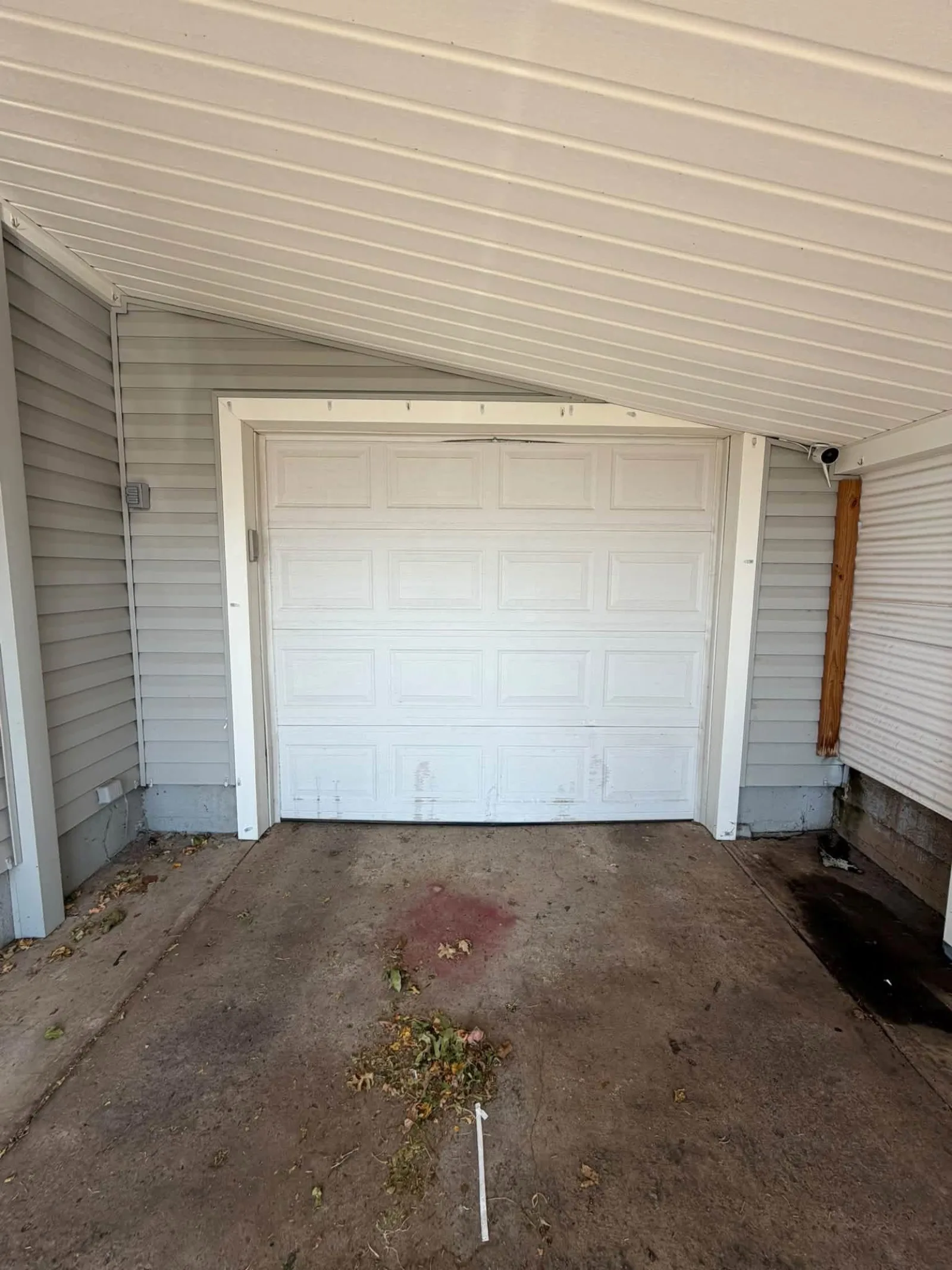
Watch one cycle, properly
Stand inside, off to one side, and run the door up and down once while actually paying attention. Most developing faults announce themselves here long before they strand anybody.
- Does it move evenlyBoth sides rising together, no hesitation, no jerk at one point in the travel.
- Does it sound the same as it used toNew grinding, a new thump, a new squeal. Change matters more than volume.
- Does it land softlyA door that slams down is a balance question.
- Do the cables stay tautSlack cable, or a cable coming off its drum, means stop.
- Is anything rubbingA roller against the track edge, a section against the stop moulding.
- Is the opener strainingA motor working hard on a door that used to be easy is the clearest early warning there is.
The two safety tests worth doing yourself
These are the ones that matter, because they are the systems that stop a closing door on a person.
- The reverse test: with the door open, lay a solid block of timber flat on the floor in the door’s path and close the door. When it touches the block it should stop and go back up. If it does not, stop using the door and call.
- The photo-eye test: start the door closing and pass a broom handle through the beam near the floor, keeping your hands out of the opening. The door should stop and reverse.
Both are on the safety check we do on every visit too — auto-reverse tested, photo-eyes aligned, springs and cables inspected, door balanced — but they are quick, and between visits they are the two that are genuinely worth your time.
Free Estimates
5-Year Warranty on All Parts & Labor.Five years on parts and labor, every repair and every install. We look at the door with you first, and nothing starts until you approve the number.
Cleaning and lubrication
- Hinges and roller stemsA product made for garage doors, sparingly, on the moving metal.
- The spring, lightlyA coating helps against rust. Never adjust, loosen or attempt to wind it.
- Not the trackThe track guides the rollers; it is not a bearing surface. Grease there collects grit.
- The photo-eye lensesA soft dry cloth. This single act prevents a large share of “won’t close” calls.
- The bottom seal and the track channelSweep out leaves, grit and the gravel that wedges under the seal.
- Bolts and bracketsSnug, not over-tightened — over-tightening pulls hardware through the section.
Your own door’s maker publishes a care document for its own product line, and that document is the one to follow for intervals and products. Clopay and Raynor both keep homeowner care pages, linked below, and the line name on your door is what finds the right one.
What never to touch, and why
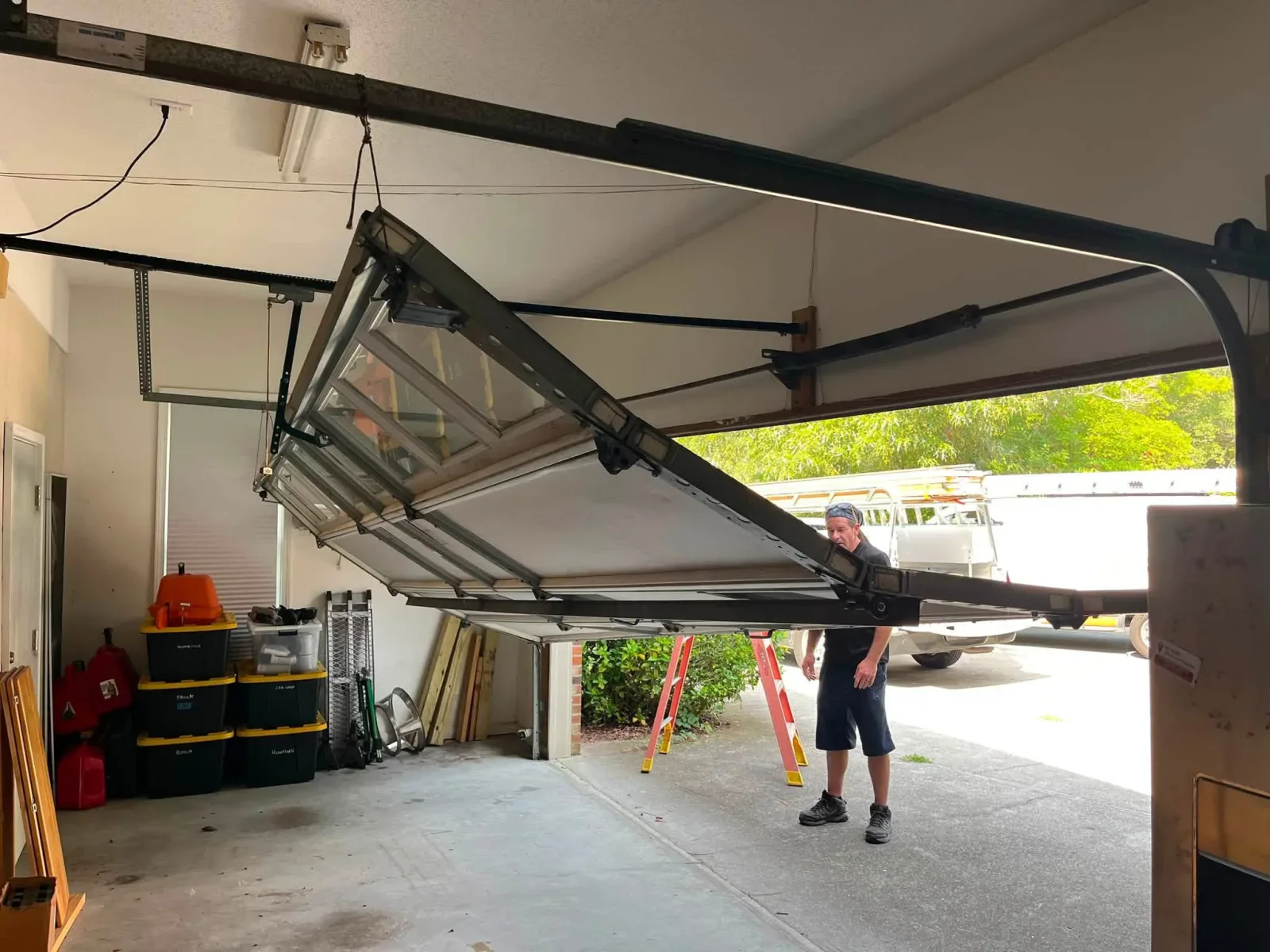
The springs above the door, the cables running down each side, the drums they wind onto and the bottom brackets at the door’s corners are one system holding a few hundred pounds in tension. Undoing any part of it releases that energy somewhere.
Door balance belongs on the same list: testing it means disconnecting the door from the opener and holding its full weight, which is a fine thing for a technician with the door closed and a poor idea otherwise.
A tune-up visit is the version of this list we do: the safety check (auto-reverse, photo-eyes, springs and cables, door balance), plus adjusting the door and the opener and lubricating the moving parts. Anything found broken is quoted separately on the estimate.
Free Estimates · a person answers 24/7
5-Year Warranty on All Parts & Labor.Five years on parts and labor, every repair and every install. Call, or send the form and a person calls you back.
Sources
- Clopay — residential garage door service and support
- Raynor — garage door safety and care
- DASMA — Technical Data Sheets (Door & Access Systems Manufacturers Association)
- Amarr — residential garage door FAQs
All sources read . Linked so you can check them rather than take our word for it.
Written from the manufacturers’ own published guidance — every source is linked above.
What you can count on
- Same-day service on most repairs.
- Upfront pricing. The price is on the estimate you approve before work starts, and the invoice matches it.
Straight answers
Questions people ask about this.
What garage door maintenance can I do myself?
How often should I do it?
Should I lubricate the tracks?
Can I test whether the door is balanced?
Describe it however makes sense to you
Read enough? Tell us about the door.
However you describe it is enough — no part names needed. The visit and the written estimate cost you nothing, and nothing starts until you approve the number.
- However you describe it is enough. No part names needed.
- The written estimate is free. Nothing owed if you pass.
- Nobody starts the repair until you approve the number.
Calls Answered 24/7
One call, and the door problem becomes ours.
A person answers 24/7. We look at the door with you first, and the written estimate comes before the work.