Buying guide · a guide, not a sales page
Garage door R-value: what the rating does and does not tell you
R-value describes resistance to heat flow. It is a real property of a real material — and it is not a description of the door you will end up living with.
The short answer
What is the difference between R-value and U-factor? The short answer
R-value is a calculation for one door section, not a measurement of the whole door. DASMA says a section’s R-value should not be used for whole garage door assemblies, because it leaves out the joints and stile attachments, and that a tested U-factor is not the inverse of an R-value. To compare two doors, ask for the whole-door U-factor, if one is published (lower is better), for the exact model.
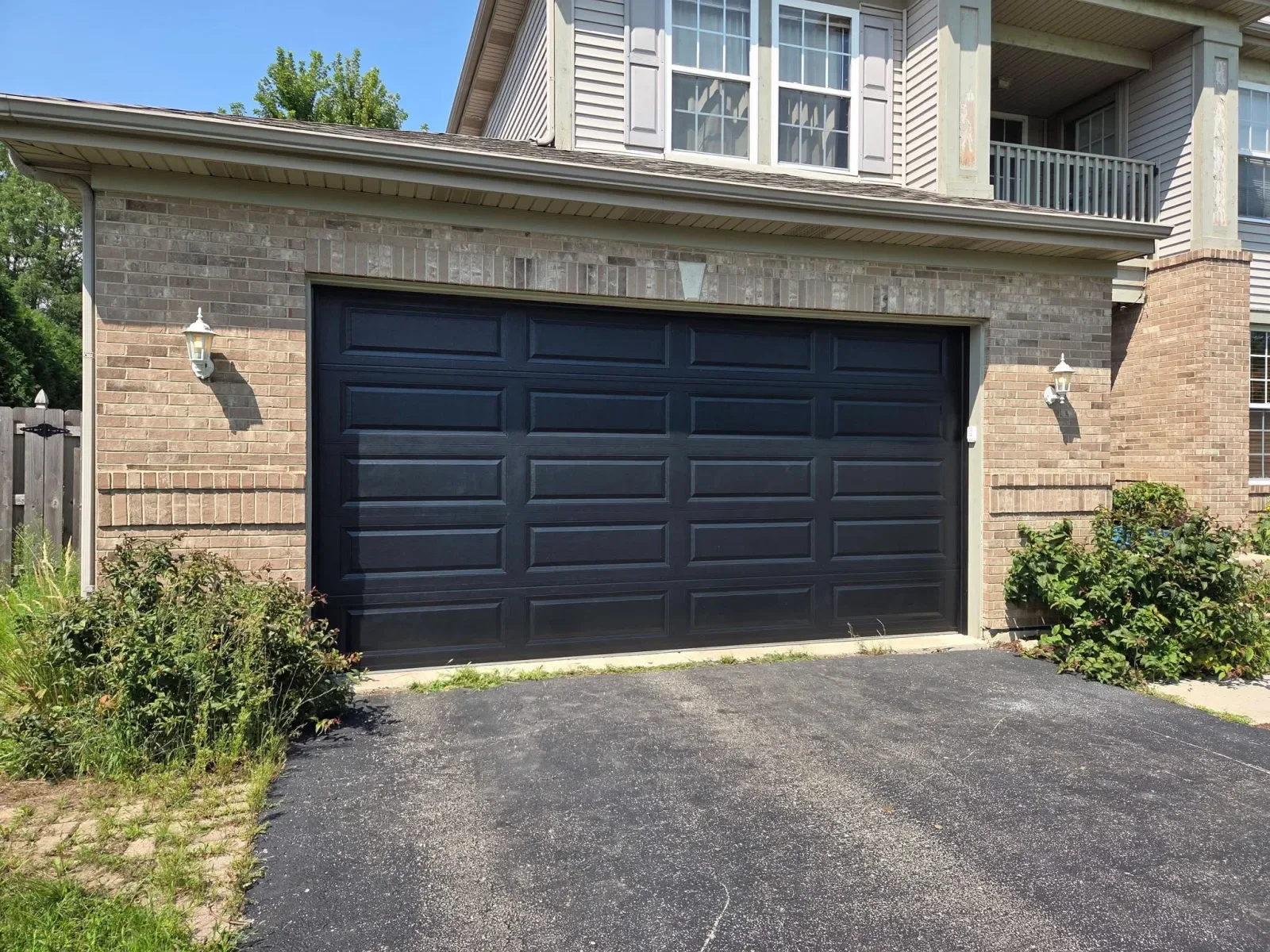
R-value and U-factor are not two ways of saying the same thing
R-value measures resistance and is calculated for a door section: higher is more resistant. U-factor measures transfer through the whole installed door, tested in a lab: lower is less transfer. DASMA says the two are not comparable and, for garage doors, not reciprocals of each other, so one is not simply the other turned upside down.
What was measured decides how far to trust a number. DASMA’s technical sheet says the calculated section value leaves out section joints, stile attachments and the like, and so should not be used for garage door assemblies. It says a tested whole-door U-factor gives the highest degree of confidence when comparing doors, and that building codes and standards deal with garage door thermal performance in terms of U-factor.
Why the insulation material matters
Polystyrene and polyurethane are the two you will meet. Material and thickness move the number.
Specifications belong to a product family rather than to a brand, so a rating quoted for one line tells you nothing reliable about another line from the same maker. The model number is the unit of comparison; the badge is not.
Free Estimates
5-Year Warranty on All Parts & Labor.Five years on parts and labor, every repair and every install. We look at the door with you first, and nothing starts until you approve the number.
A comparison checklist that actually works
- The manufacturer and the model number Everything below is meaningless without it.
- How many layers, and of what Single skin, two-layer, three-layer, and which insulant.
- The published value and what it covers A section, a panel center, or the whole assembly.
- A whole-door U-factor, if one exists And which test method produced it.
- Windows Glazing changes the assembly, and often changes it more than a layer does.
- The seals Perimeter, jamb and floor. This is where a good door quietly becomes an average one.
- Wind-load requirements They can constrain construction, so they belong in the same conversation.
- The warranty What it covers, and for how long, per model.
How much do you need in DFW?
There is no universal answer, and anyone offering one has not asked about your garage. What decides it: whether the garage is attached, what sits next to or above it, which way the door faces, how often the space is used, how big the opening is, whether there are windows, and how well the whole thing seals.
A daily-use attached garage under a bedroom justifies a great deal more than a detached slab that stores a car and a mower.
What this page will not promise
A temperature drop. An annual saving. A payback period. None of those can be given honestly without knowing the building, the exposure, the HVAC, how the door gets used and which product actually goes on.
We would rather explain the measurement than sell you a number, because the number is the part that does not survive contact with your garage.
Free Estimates · a person answers 24/7
5-Year Warranty on All Parts & Labor.Five years on parts and labor, every repair and every install. Call, or send the form and a person calls you back.
Sources
- DASMA — Technical Data Sheet 163, “U-factor and R-value for Residential and Commercial Garage Doors”
- Clopay — residential garage door service and support
Sources read , except DASMA sheet 163, read . Linked so you can check them rather than take our word for it.
Written from the manufacturers’ own published guidance — every source is linked above.
What you can count on
- Upfront pricing. The price is on the estimate you approve before work starts, and the invoice matches it.
Straight answers
Questions people ask about this.
What is the difference between R-value and U-factor on a garage door?
Is a higher R-value always better?
Does R-value describe the whole installed door?
What should I compare besides R-value?
Describe it however makes sense to you
Read enough? Tell us about the door.
However you describe it is enough — no part names needed. The visit and the written estimate cost you nothing, and nothing starts until you approve the number.
- However you describe it is enough. No part names needed.
- The written estimate is free. Nothing owed if you pass.
- Nobody starts the repair until you approve the number.
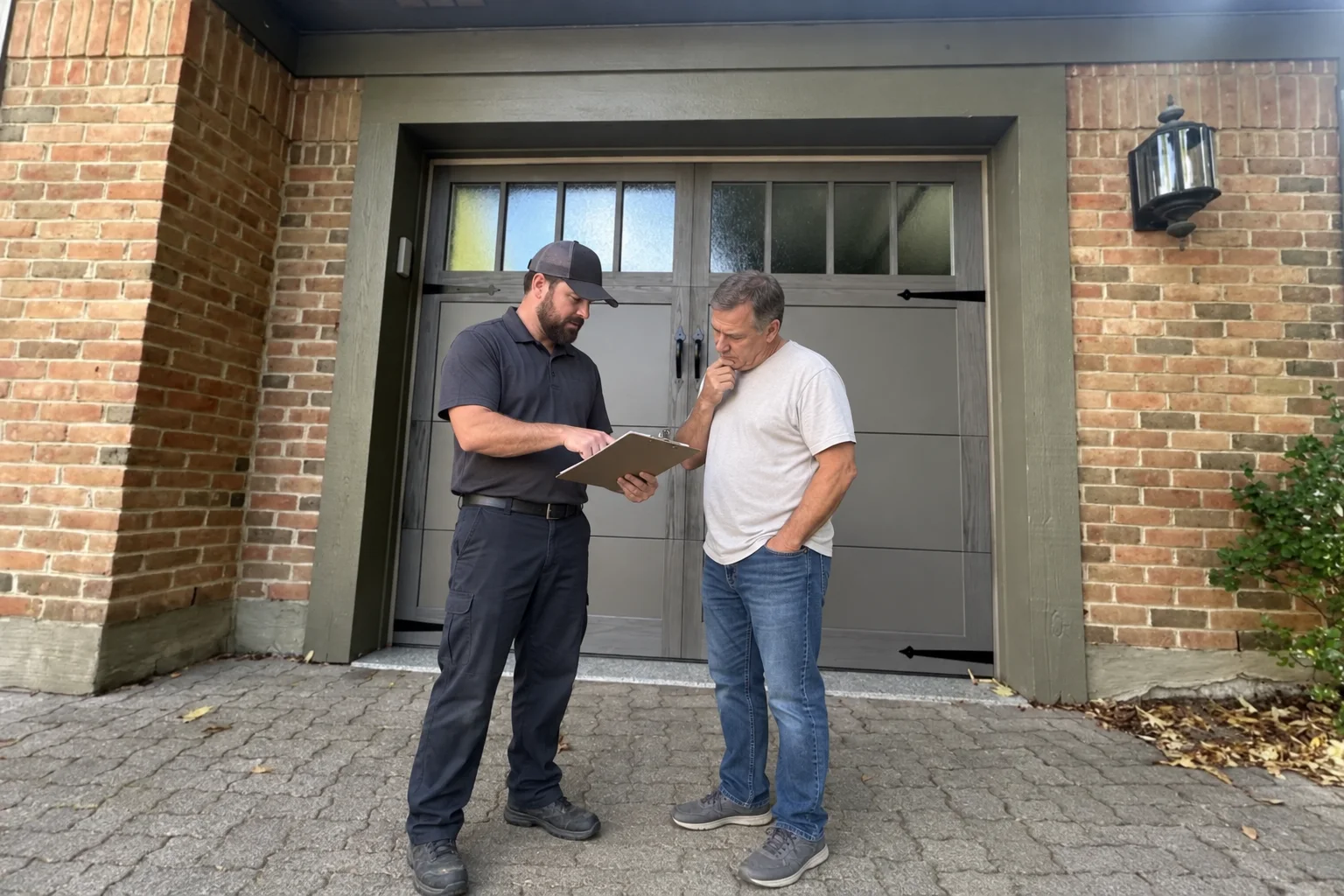
Calls Answered 24/7
One call, and the door problem becomes ours.
A person answers 24/7. We look at the door with you first, and the written estimate comes before the work.